Emergency Roof Tarping in NJ: What Happens After You Call
Emergency Roof Tarping in NJ: What Happens After You Call
May 9, 2026
It's midnight. Water is coming through the ceiling. A storm just ripped something open overhead and you're not sure how bad it is. You're trying to decide if you should go up there or just call someone. Call someone. Here's exactly what happens after you do.
Why Tarping Matters Right After a Storm
A roof breach doesn't stay a roof problem. It becomes an insulation problem, a drywall problem, and — within hours — a potential mold problem. Water doesn't stop moving once it gets through the roof deck. It follows framing, soaks insulation, and pools inside walls where you can't see it until the damage is already significant.
A tarp doesn't fix the roof. But it stops water from getting in while you get the damage properly assessed and a real repair scheduled. That's the whole point — buy time without the interior of your home taking on more water.
What to Do Before the Crew Arrives
Stay off the roof. Storm-damaged roofing material is unpredictable — soft spots, lifted sheathing, hidden debris — and most of the danger isn't visible from the ground.
While you wait, do these things:
Move furniture, electronics, and valuables away from the affected area
Put buckets or trash cans under active drips to limit interior water spread
Photograph the interior damage — water stains, wet surfaces, everything — before anything is moved or dried out
Clear your driveway and any access to the affected section of the roof so the crew can get equipment to the right spot fast
If you haven't filed an insurance claim yet, start your documentation now — date-stamped photos from the moment you notice the damage are valuable when the adjuster asks for a timeline
The Tarping Process, Step by Step
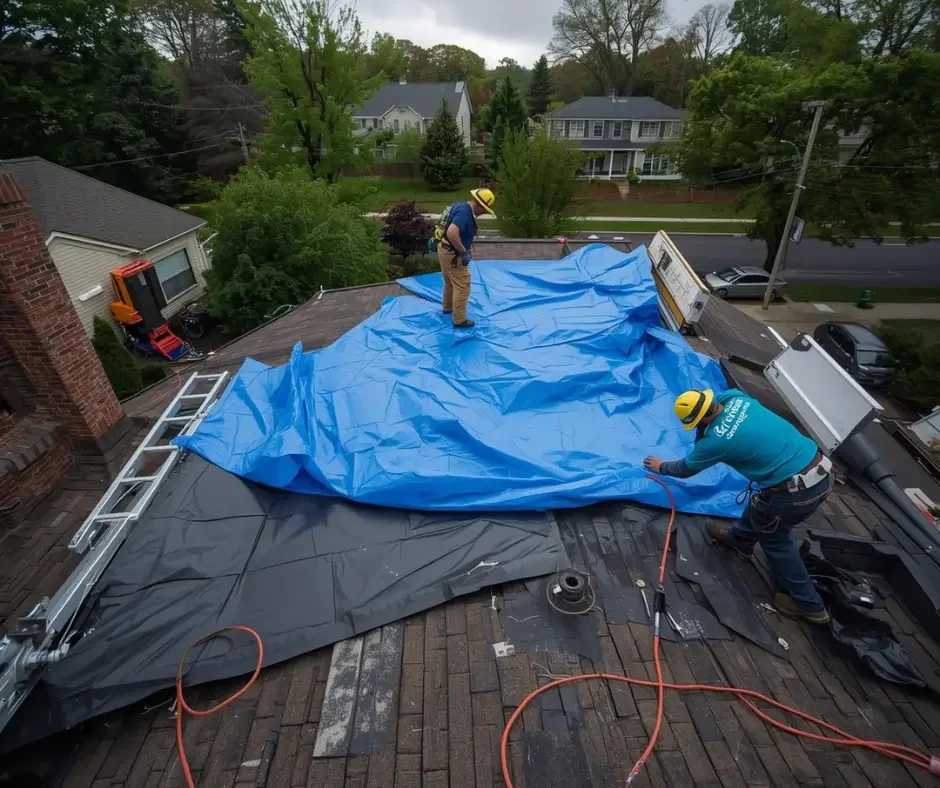
When the G.R.M. Roofing crew arrives, here's what happens:
Damage assessment. We look at the roof — from the ground and from the surface when conditions allow. We identify the full extent of the breach: where the deck is exposed, how large the affected area is, and whether there are secondary entry points the storm may have opened.
Prep. The damaged area is cleared of debris. If there's material that's partially lifted or loose, it's stabilized or removed before the tarp goes down.
Tarp installation. We use heavy-duty tarps secured with wood furring strips and screws — not bungee cords, not duct tape. The edges are lapped to direct water away from the opening, and the perimeter is fastened to prevent the tarp from lifting in follow-up wind. Done correctly, the tarp holds through another storm.
Final check. We verify the edges are properly sealed, walk the job with you before leaving, and make sure you know exactly what was covered and what the plan is for the permanent repair.
How Long Does a Tarp Last?
A properly installed tarp can protect a roof for 90 days or more under normal conditions — longer in mild weather, shorter in repeated high-wind events. A tarp that's simply weighted down or loosely fastened won't survive a nor'easter. Ours will.
That said, a tarp is a temporary measure. The actual repair or replacement needs to follow while the damage is documented and any insurance claim is moving forward.
What Comes Next After the Tarp Is Down
Once your roof is secured, the next step is a full damage assessment and a written estimate. That documentation is what your insurance company needs — and it gives you a clear picture of the full repair scope.
G.R.M. Roofing handles the complete chain: emergency tarping → damage assessment → written estimate → storm and wind damage roof repair or full replacement. We also work with insurance carriers directly.
If you're not sure how the insurance claims process works, our blog post on how to file a roof insurance claim walks through it step by step. You can also request a free roof inspection once conditions are safe. For major damage situations, emergency roof repair is available as well.
Frequently Asked Questions
Is emergency roof tarping covered by homeowners insurance in NJ?
In most cases, yes. Emergency tarping is considered a protective measure to prevent further damage, and most homeowners policies in NJ cover it as part of a storm damage claim. Save your receipts and document the damage before the tarp goes on.
How quickly can G.R.M. Roofing respond for emergency tarping?
GRM Roofing offers 24-hour emergency roof repair services for Ocean County homeowners. Response time depends on conditions and call volume after major storms, but active water intrusion situations are prioritized.
Can I tarp my own roof after a storm?
It's not recommended. Storm-damaged roofs are unstable, and working on a wet or weakened surface is dangerous. A professional crew has the equipment and experience to tarp safely without causing additional damage.
Call (609) 389-2485 any time for emergency tarping in Ocean County. For non-emergency scheduling, we're available Monday through Friday, 7AM to 7PM.