
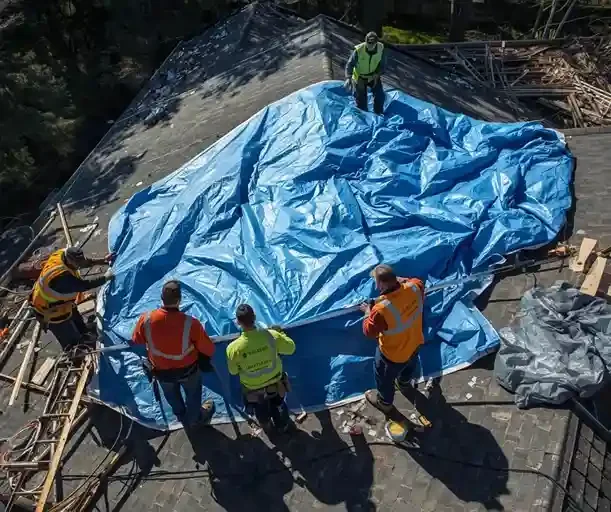
Emergency Roof Tarping in Little Egg Harbor — 24/7 Storm Response
When your roof is open to the sky, every minute counts. We're on call around the clock to stop the water and protect your home.
What Is Emergency Roof Tarping?
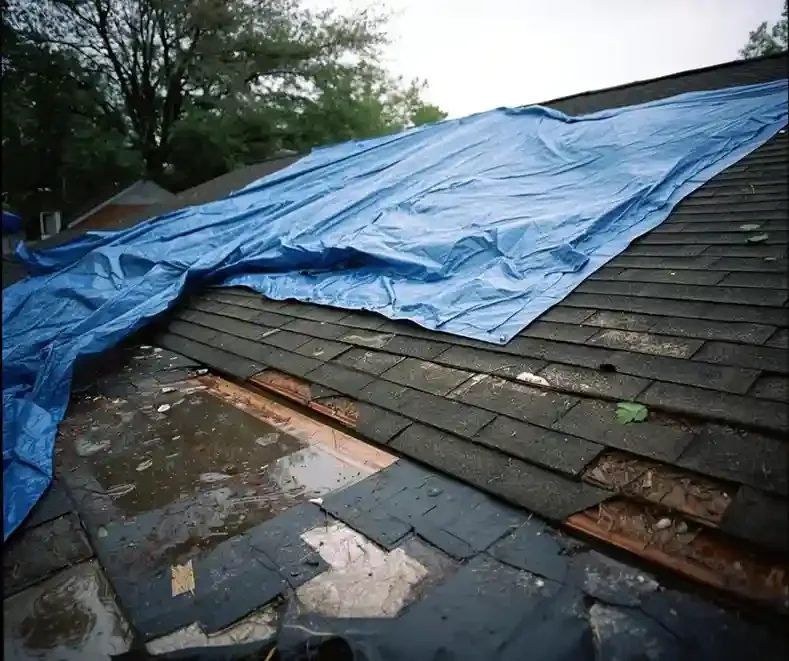
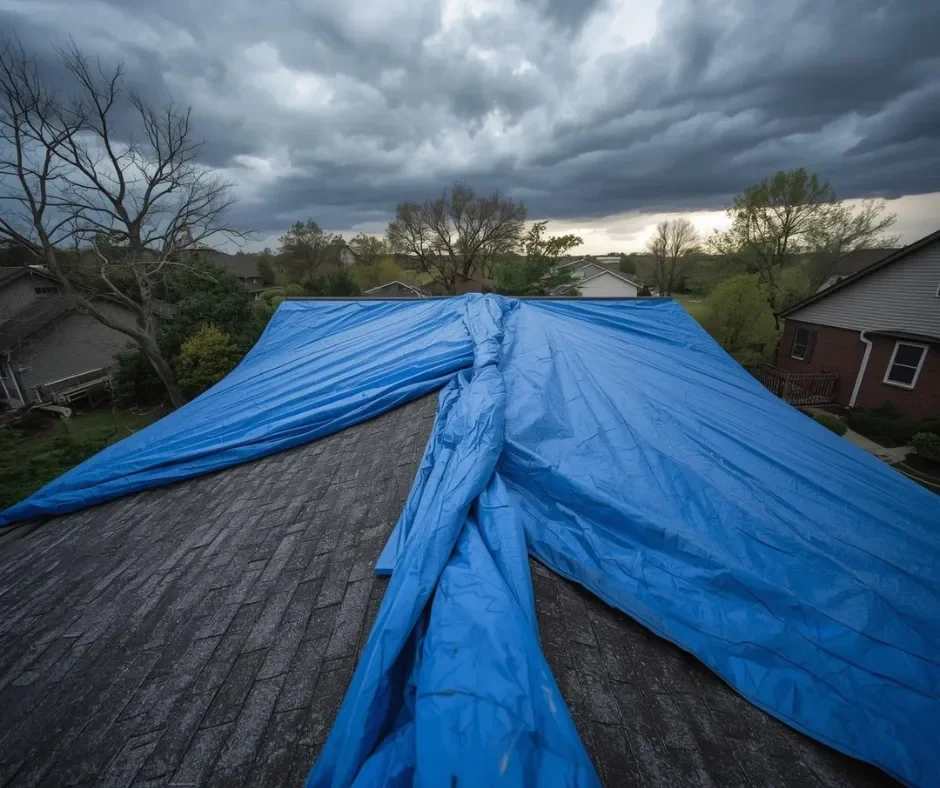
Emergency roof tarping is the first line of defense when your roof is compromised. It's a temporary, heavy-duty tarp secured over the damaged area to keep water out until permanent repairs can be made.
It's not a repair. It's a stop-gap. But it's a critical one. The difference between tarping your roof the night of a storm and waiting until Monday morning can be thousands of dollars in water damage, mold remediation, and ruined belongings.
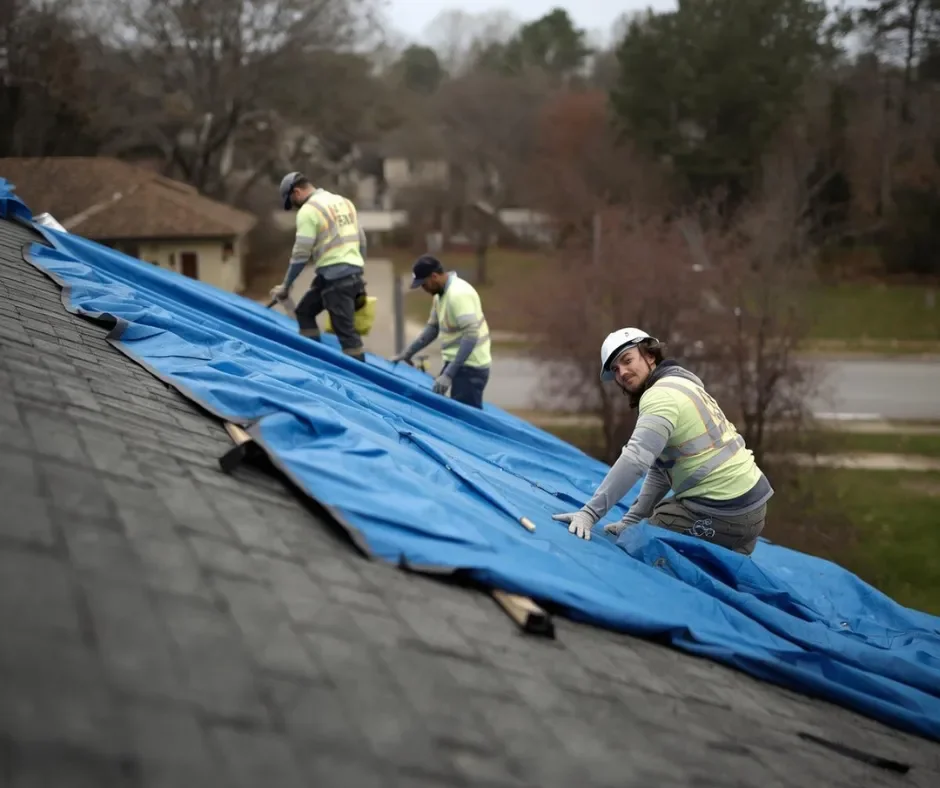
At G.R.M. Roofing, we provide emergency roof tarping around the clock — days, nights, weekends, holidays. Tarping is part of our full emergency roof repair services. When you call, we respond. We're based in Little Egg Harbor, which means we're already close to you when a storm hits Ocean County.
What Happens If You Don't Tarp a Damaged Roof
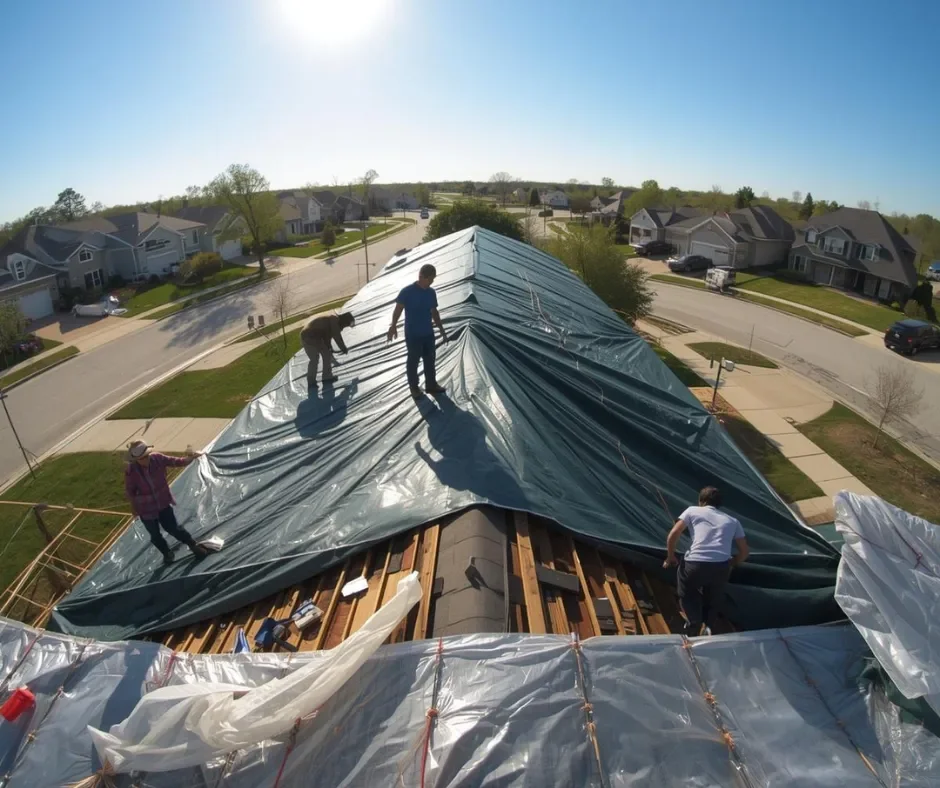
Water doesn't wait. Once your roof has an opening, everything underneath is at risk. Here's what we see when homeowners delay:
Mold growth — Mold can begin developing within 24 to 48 hours of moisture intrusion. Once it starts, remediation is expensive and disruptive.
Structural damage — Water soaking into roof decking, rafters, and wall framing weakens the structure of your home. Wood rot spreads fast in humid coastal conditions.
Interior damage — Ceilings, walls, flooring, furniture, electronics — anything below the opening is fair game. What starts as a stain on the ceiling becomes a collapsed section of drywall.
Electrical hazards — Water near wiring and electrical panels is dangerous. It can cause short circuits, tripped breakers, and in serious cases, fire risk.
Higher insurance costs — Many insurance policies require homeowners to take reasonable steps to prevent further damage after an incident. If you don't tarp and the damage gets worse, your insurer may reduce or deny part of your claim.
Regular roof maintenance helps catch weak spots before a storm turns them into emergencies.
When You Need Emergency Roof Tarping
Any time your roof has an opening and weather is coming (or already here), tarping is the move. The most common situations we respond to:
Storm damage — High winds tear off shingles or lift flashing, leaving the underlayment or decking exposed. Rain is coming, and your roof has holes. If your home has solar panels, we also offer solar panel roofing services to coordinate the full repair.
Fallen trees or branches — A tree limb punches through the roof or displaces a section of shingles. The opening needs to be sealed immediately.
Fire damage — After a fire, sections of the roof may be burned through or structurally compromised. Tarping protects the interior from further weather damage during the restoration process.
Active leaks during a storm — If water is actively pouring in and the source is a damaged section of roof, tarping stops the flow until conditions are safe for a permanent repair.
Aging roof failure — Sometimes an old roof just gives out. A section collapses or shingles blow off in a moderate wind. Tarping buys you time to plan and budget for a replacement without your home flooding in the meantime.
Our Emergency Roof Tarping Process
When you call G.R.M. Roofing for emergency tarping, here's what happens:
Step 1 — Immediate Response. You call. We answer — day or night. We ask about the situation, assess urgency, and dispatch a crew. Because we're based in Little Egg Harbor, our response time across Ocean County is fast.
Step 2 — On-Site Assessment. Our crew arrives and evaluates the damage. We identify the compromised area, check for safety hazards (downed power lines, structural instability), and determine the best tarping approach for your specific roof.
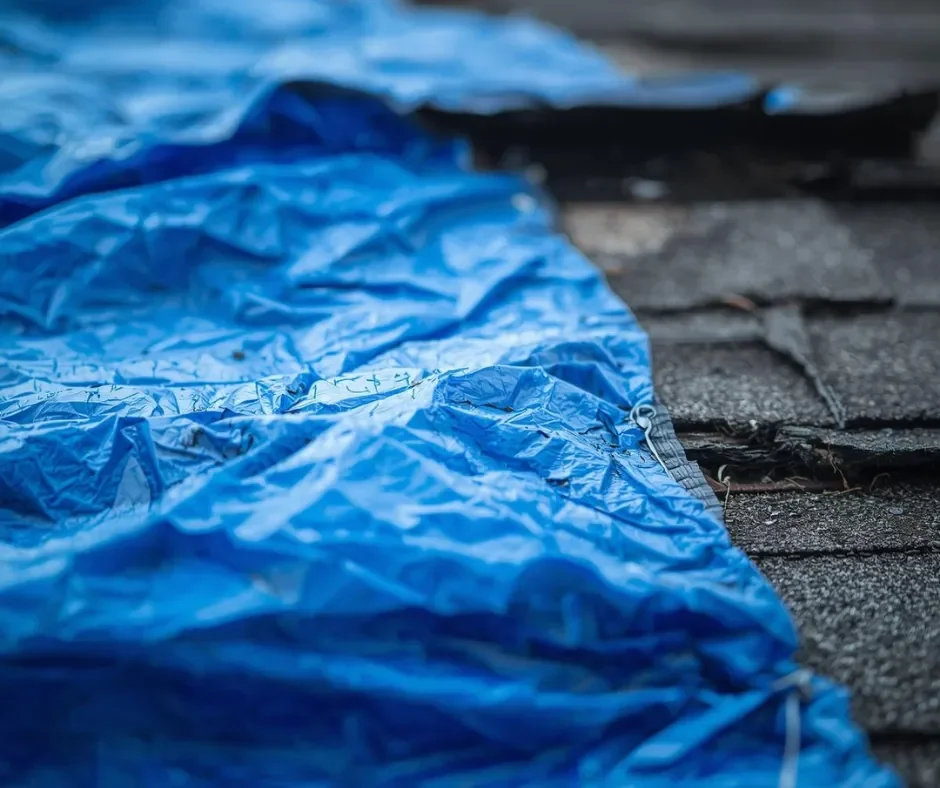
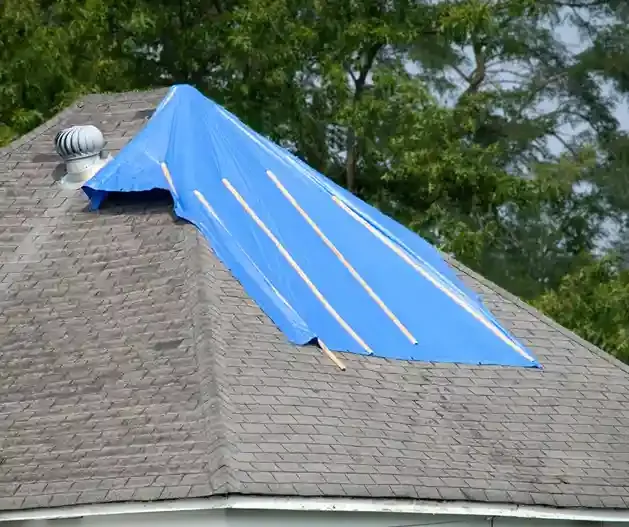
Step 3 — Tarp Installation. We use heavy-duty, weather-resistant tarps secured with furring strips and fasteners — not just weighted down with bricks or sandbags. The tarp extends past the damaged area on all sides to create a proper seal. This method holds up through additional storms and won't blow off in the wind.
Step 4 — Damage Documentation. While we're on the roof, we photograph the damage for your insurance claim. This documentation is taken before the tarp goes on, so there's a clear record of the condition of your roof at the time of the incident.
Step 5 — Next Steps. Once the tarp is secure and your home is protected, we discuss permanent repair options. We can schedule a full inspection for the next safe-weather day and plan your storm damage roof repair based on what we find. If you're filing an insurance claim, we'll help with that too.
Why Call GRM for Emergency Roof Tarping
Roof Tarping and Your Insurance Claim
Here's something a lot of homeowners don't realize: most insurance policies require you to take reasonable steps to prevent further damage after an incident. This is called the "duty to mitigate."
Emergency roof tarping is one of the clearest ways to meet that requirement. It shows your insurer that you acted quickly to protect your property. If you skip tarping and the damage gets worse — more water intrusion, mold, structural deterioration — your insurance company may argue that the additional damage was preventable and reduce your payout.
We document the damage before tarping with timestamped photos. This gives your adjuster a clear picture of the original condition. We also provide a tarping invoice that many insurers accept as part of the overall claim.
Bottom line: tarping doesn't just protect your home. It protects your claim.
When your roof is open and water is coming in, you need someone close, available, and experienced. Here's why Ocean County homeowners call us:
Local — We're based in Little Egg Harbor. We're not driving in from North Jersey or Philly. We get to you fast.
24/7 Availability — Storms don't follow business hours. Neither do we. Call us at 2 AM and a real person answers.
Proper Installation — We secure tarps with furring strips and fasteners, not shortcuts. Our tarps hold through follow-up storms.
One Call, Full Service — We tarp tonight, inspect tomorrow, and repair when you're ready. You don't need to call three different companies.
Insurance Documentation — We photograph everything before tarping so your claim is supported from the start.
GAF Master Elite Certified — When it's time for the permanent repair, you're already working with one of the top-rated contractors in the area.
Emergency Roof Tarping FAQ
How much does emergency roof tarping cost?
Costs depend on the size of the damaged area, the complexity of your roof, and whether it's an after-hours call. Emergency tarping is typically billed separately from the permanent repair. We provide a clear estimate before work begins, and many insurance policies cover tarping as part of the emergency mitigation.
Does homeowners insurance cover roof tarping?
Most policies cover emergency tarping as part of the mitigation effort after storm damage. Insurance companies generally expect homeowners to take reasonable steps to prevent further damage. Tarping qualifies. We provide documentation and invoices that support your claim.
How long can a tarp stay on a roof?
A properly installed tarp can protect your roof for several weeks to a few months, depending on weather conditions and the quality of the installation. However, tarping is a temporary measure — not a long-term fix. We recommend scheduling permanent repairs as soon as possible to avoid ongoing risk.
What should I do while waiting for a tarping crew?
Stay safe. Don't climb on the roof yourself. Move furniture and belongings away from any active leaks inside. Place buckets or towels under drips. Take photos of the damage from the ground if possible. Then call us at (609) 389-2485 — we'll get a crew to you as quickly as conditions allow.
Can you do permanent repairs the same day as tarping?
In most cases, no. Emergency tarping happens in active weather or immediately after a storm, when conditions aren't safe or ideal for permanent repair work. We tarp to stop the damage, then schedule the repair for the next available safe-weather window. If conditions allow and the damage is minor, we may be able to make a permanent fix on the spot — but we'll always tell you the best path forward based on the situation.
Roof Damaged? Call for Emergency Tarping Now.
Don't wait for the next rainstorm to make it worse. Call G.R.M. Roofing at (609) 389-2485 — day or night. We'll get your roof covered, document the damage for your insurance claim, and set you up for a permanent repair. That's what a local roofing company is for.