
Professional Roof Replacement & Repair with Solar Panels in Ocean County, NJ
Your Solar Panel Roofing Experts in Ocean County
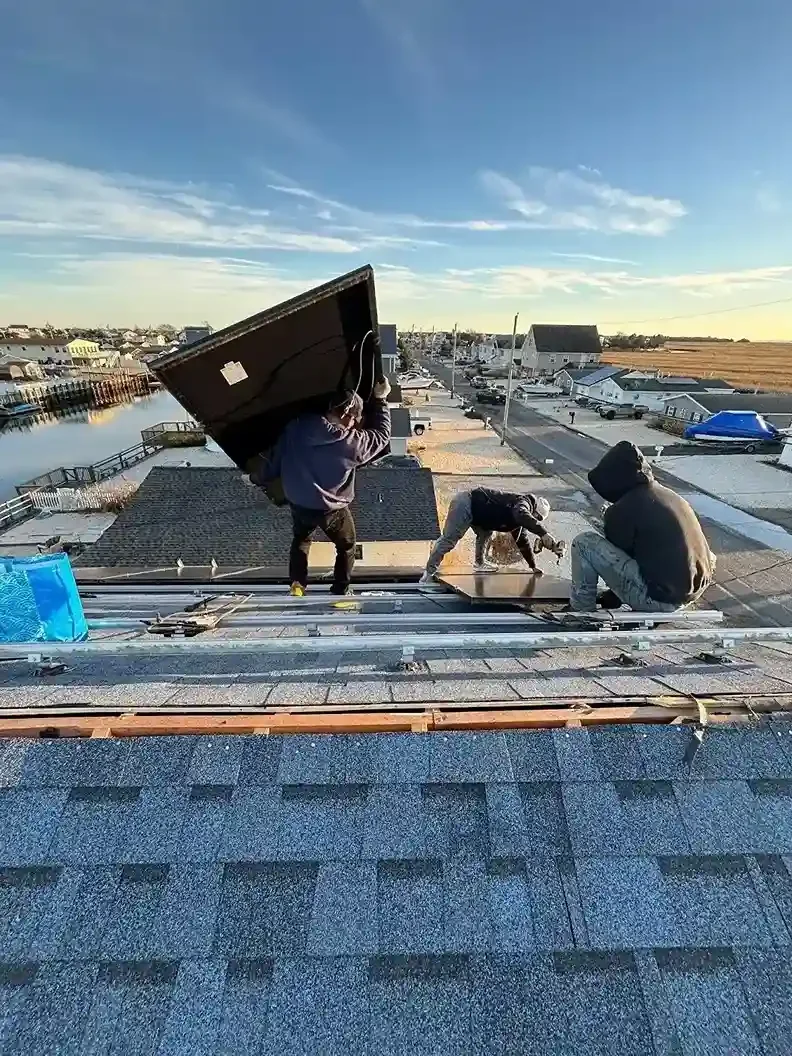
At GRM Roofing, we're one of the few roofing contractors in Ocean County with a licensed electrician on staff. This means we safely disconnect and reconnect your solar panels during roof work. You avoid outside contractors and protect your warranty. We provide solar panel roofing on Long Beach Island, Little Egg Harbor, Toms River, Lakewood, Brick, and throughout Ocean County, New Jersey.
When your roof needs repair or replacement and you have solar panels, you need more than just a roofer—you need a team with electrical expertise. Our licensed electrician handles all solar panel disconnection and reconnection work in-house, ensuring your system remains safe, functional, and under warranty. Call (609) 389-2485 for a free estimate on your solar panel roofing project.
4. Roof Replacement or Repair
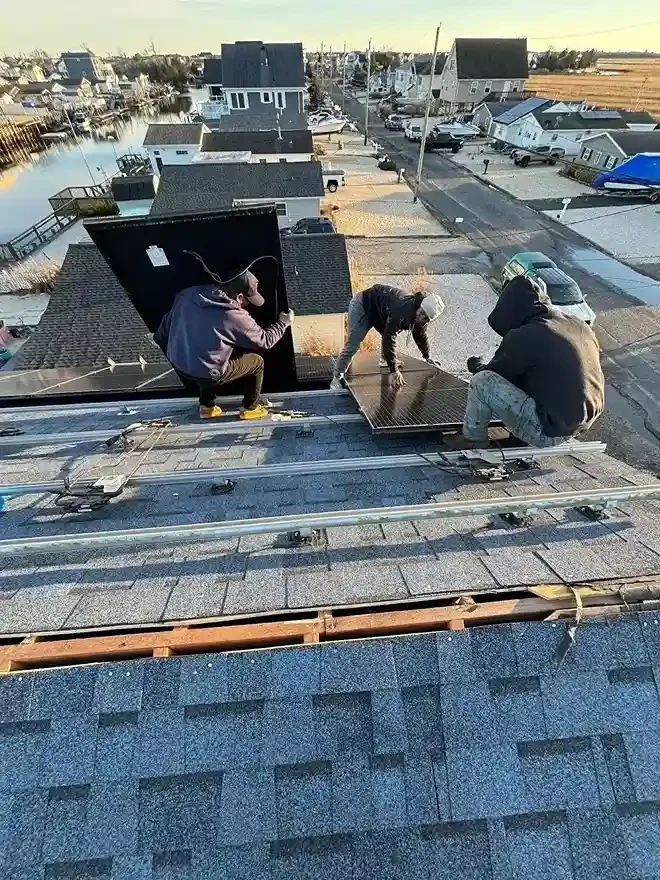
With panels safely removed, we complete your roofing work—whether it's a full replacement, section repair, or flashing replacement. We inspect and repair roof decking as needed.
5. Professional Reinstallation
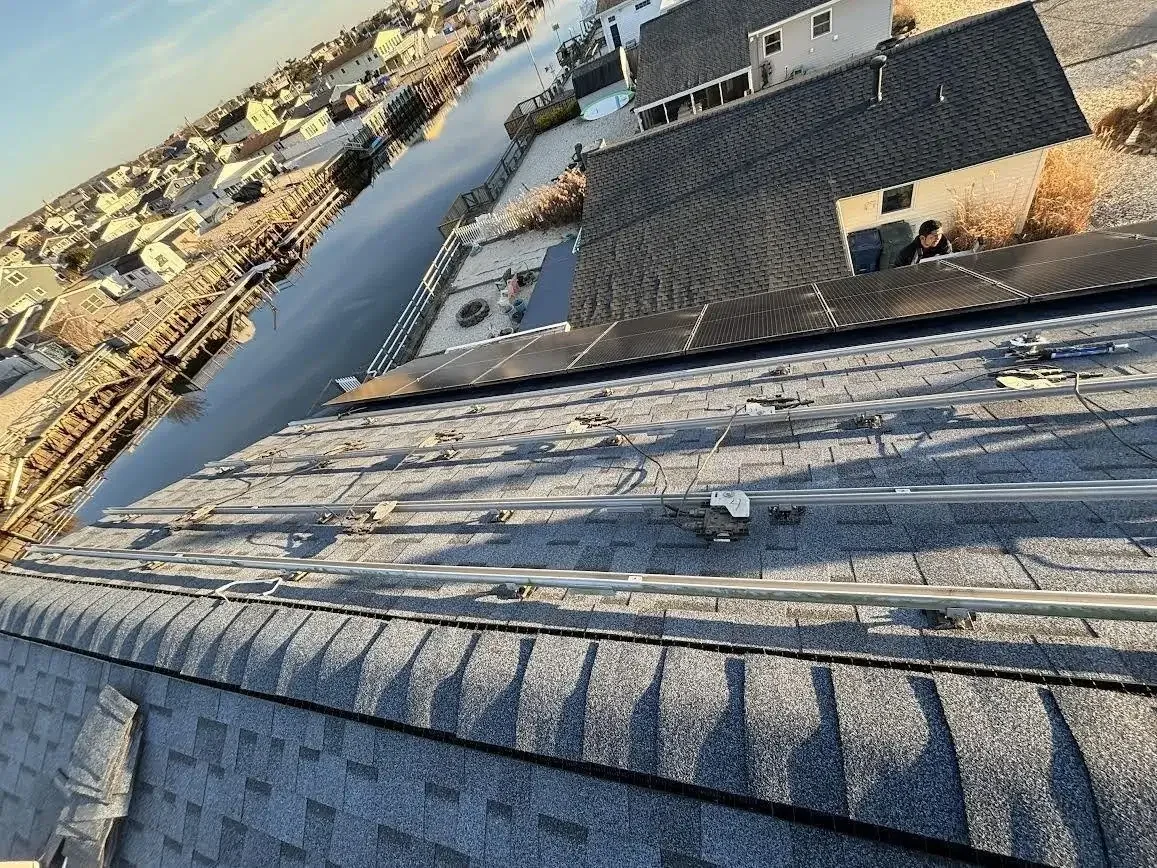
Panels are remounted securely using proper racking systems. We ensure all mounting points are properly sealed and flashed to prevent future leaks.
6. Electrical Reconnection
Our licensed electrician reconnects your solar panel system, verifying all connections meet electrical code requirements.
7. Final Testing & Inspection
We test your solar system to verify it's producing power properly and conduct a final inspection to ensure quality workmanship throughout.
Timeline: Most residential solar panel roof replacements are completed in 2-3 days. Day one for panel removal, day two for roofing work, and a half day for reinstallation and testing.
Our Solar Panel Roof Replacement Process
We've developed a streamlined process that protects both your roof and your solar investment:
1. Initial Inspection
We assess your roof condition and solar panel system. Our team examines mounting points, electrical connections, and overall system configuration to plan the safest approach.
2. Licensed Electrical Disconnection
Our licensed electrician safely disconnects your solar panels from your electrical system, following all New Jersey electrical codes and manufacturer requirements.
3. Panel Removal & Protection
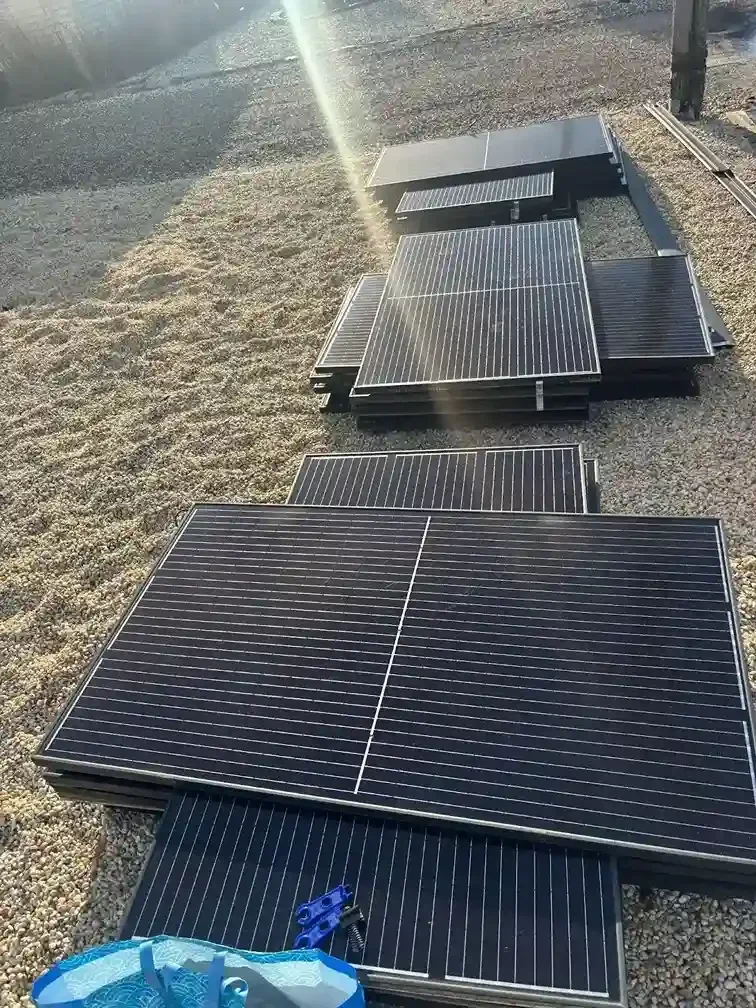
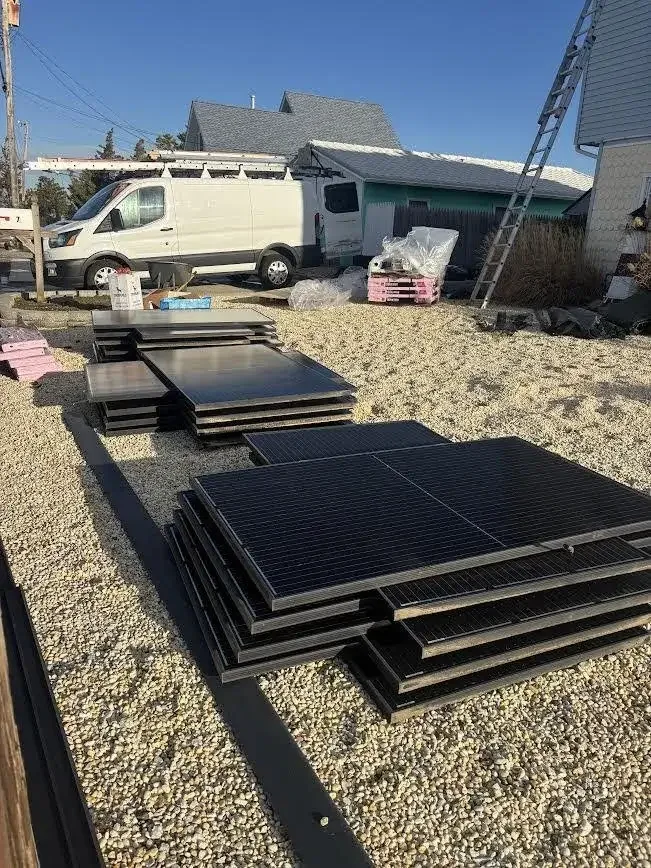
Solar panels are carefully removed from mounting brackets and stored securely on-site. We document the layout to ensure proper reinstallation.
Protect Your Solar Panel Warranty
Solar panel manufacturers require that all electrical work be performed by licensed professionals. Improper disconnection or reconnection can void your warranty, potentially costing thousands in lost coverage. We maintain full documentation of all work performed to protect your investment.
Safety Concerns with High-Voltage DC Systems
Solar panels generate DC voltage that can exceed 600 volts in residential systems. This presents serious shock and fire hazards if handled improperly. Our licensed electrician has specialized training in photovoltaic systems and follows strict safety protocols.
Insurance Requirements
Most homeowners insurance policies require that electrical work be performed by licensed professionals. Using an unlicensed contractor for solar panel work could jeopardize your coverage.
NJ Electrical Code Compliance
New Jersey has specific requirements for solar panel installations and modifications. Our work complies with all state and local electrical codes, ensuring your system passes inspection.
Why Licensed Electrical Work Matters for Solar Panel Roofing
Most Roofers Can't Legally Disconnect Solar Panels
Solar panels operate on high-voltage DC systems that require licensed electrical work for safe disconnection. Most roofing contractors must hire outside electricians, creating coordination challenges and additional costs. With GRM Roofing, everything is handled in-house by our experienced team.
New Jersey Electrical Permits Required
Any work involving solar panel electrical disconnection requires proper permits in New Jersey. Our licensed electrician (NJ Electrical License #[YOUR LICENSE NUMBER]) pulls all necessary permits and ensures work meets state electrical codes.
Solar Panel Roofing Services We Provide
We offer comprehensive roofing services for homes and businesses with solar panel systems:
Complete Roof Replacement with Solar Panel Removal & Reinstallation - Full roof tear-off and replacement with professional solar panel handling
Roof Repair Around Solar Panel Mounting Points - Targeted repairs to address leaks at mounting locations
Solar Panel Racking Inspection and Repair - Assessment and repair of mounting systems and hardware
Flashing Replacement Under Solar Panels - Replacement of deteriorated flashing without full roof replacement
Emergency Roof Leak Repair with Solar Panels - Fast response for urgent repairs involving solar panel systems
Commercial Solar Panel Roofing - Large-scale commercial roof work with solar panel systems
Common Roofing Issues with Solar Panels
Leaks Around Mounting Points
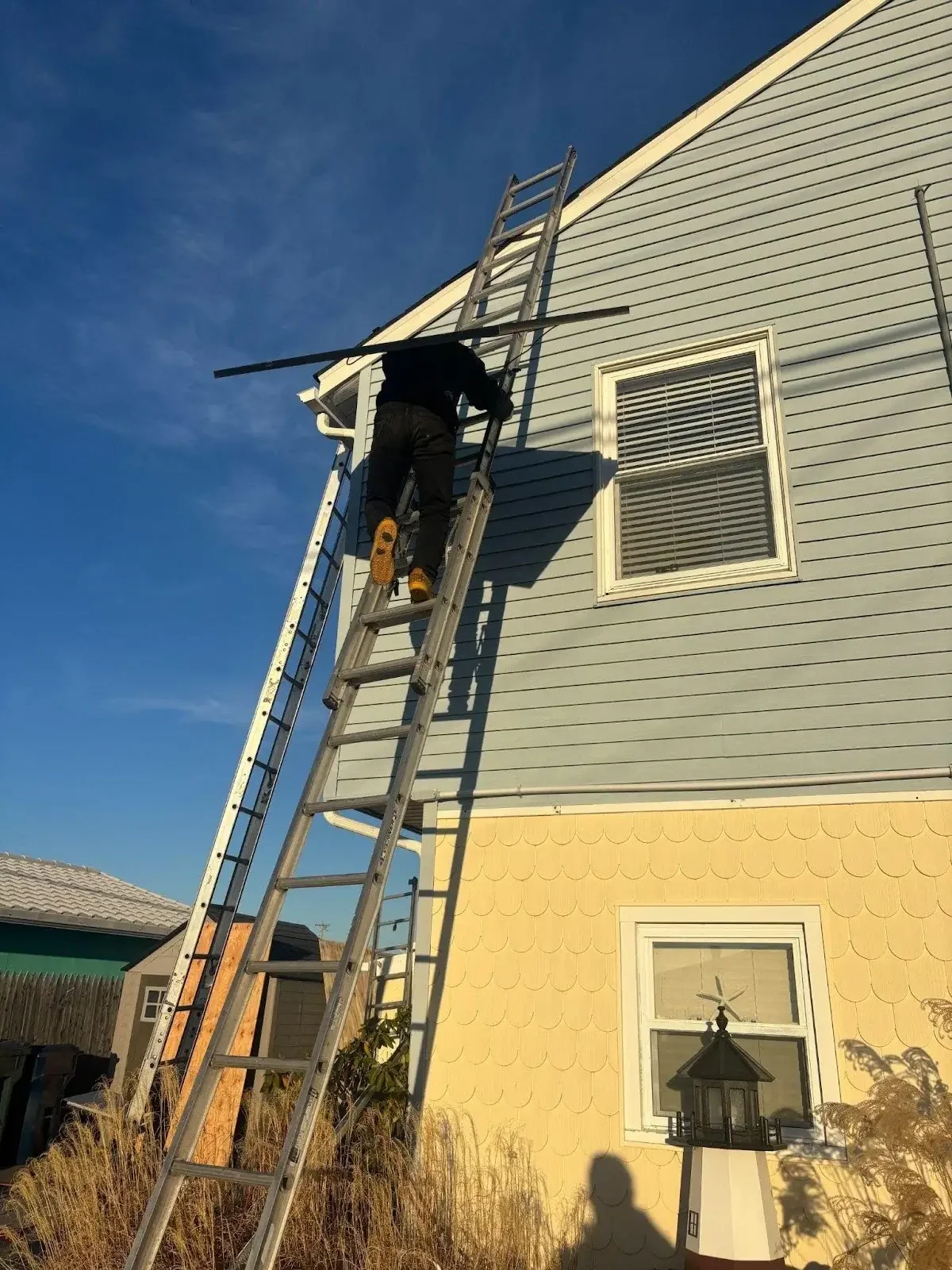
Solar panel mounting brackets penetrate your roof surface, creating potential leak points. Over time, flashing around these penetrations can deteriorate, allowing water infiltration. We inspect all mounting points and replace damaged flashing to prevent leaks.
Damaged Flashing Under Panels
Flashing installed during the original solar panel installation may not have been done properly, or it may have degraded over time. Accessing and repairing this flashing requires panel removal—something we handle safely with our licensed electrician.
Aging Roofs That Need Replacement
If your roof was older when solar panels were installed, you may now face the challenge of replacing the roof before the solar panels reach the end of their life. We coordinate complete roof replacement while protecting your solar investment.
Storm Damage to Roof with Panels
Severe weather can damage both your roof and solar panel mounting systems. High winds can lift panels, hail can damage both shingles and panels, and falling debris can cause multiple issues. Our team assesses all damage and coordinates repairs.
Improper Initial Installation
Some solar panel installations are done without proper roofing expertise, leading to inadequate flashing, improper sealing, or damage to roof materials. We correct these issues to prevent ongoing problems.
We also pay close attention to roof penetrations. Every spot where mounting hardware connects to your roof is a potential leak point if not sealed properly. When we're installing your new roof, we make sure every penetration is flashed correctly and sealed with high-quality materials designed for the coastal environment. We've seen too many solar installations where the original installer didn't account for wind-driven rain and salt exposure, leading to premature failure of seals and flashing.
Your electrical connections get documented and protected throughout the process. Our licensed electrician handles all disconnections and reconnections, ensuring everything meets current electrical code and safety standards. We don't cut corners on the electrical side because that's where serious problems can develop if things aren't done right. When we turn your system back on, it should perform exactly as it did before—no voltage issues, no connectivity problems, no mysterious drops in production.
Roof Materials That Work Best With Solar Panels
Not all roofing materials play nicely with solar panel systems, and out here in Little Egg Harbor, you've got to think about both the solar mounting requirements and our coastal climate.
The key is making sure whatever material you choose is rated for the weight of your solar array plus snow load, even though we don't get massive snowfall here—building inspectors still want to see the numbers work.
Metal roofing is actually an excellent choice if you're replacing your roof and have solar panels. The standing seam metal roofs let us attach solar mounting hardware without penetrating the roof surface in most cases, which eliminates a whole category of potential leak points.
Metal roofs also last 40-50 years, which means your roof will likely outlive your solar panels and you won't face another removal and reinstallation situation. The upfront cost is higher, but the math works out better long-term, especially when you factor in durability against salt air and severe weather.
Tile roofs are less common in Little Egg Harbor, but if you've got one with solar panels, you need someone who knows what they're doing. Walking on tile roofs can crack tiles if you're not careful, and the mounting systems are more complex. We've handled tile roofs with solar in other parts of Ocean County, and the process takes longer because everything requires more precision to avoid damage.
Asphalt shingles are the most common choice and they work fine with solar panels, but you want architectural shingles rated for high winds—not the basic three-tab shingles that'll start lifting in the first serious storm.
We've also worked with composite and synthetic roofing materials on solar homes. These products are designed to mimic slate or shake but with better durability and lighter weight. They handle solar panel mounting well and stand up to our coastal conditions better than traditional materials.
Whatever material you're considering, we'll walk you through how it interacts with your solar system, what the expected lifespan is in our climate, and what your realistic costs look like. There's no point in installing a 20-year roof under solar panels that'll last 30 years—you'll just end up paying for another removal and reinstallation down the line.
How Long Does Solar Panel Roof Replacement Take?
A standard roof replacement in Little Egg Harbor typically takes 2-3 days depending on your home's size and roof complexity. Add solar panels to the mix and you're looking at 5-7 days total for the complete project. That includes removal, roofing work, reinstallation, and final system checks.
Here's how it breaks down: we'll spend a day on the initial solar inspection and documentation, then our electrician disconnects your system. The next day we remove all panels and mounting hardware, which usually takes a full day for most residential systems. Then we complete your roof replacement, which might be 2-3 days depending on size and whether we're dealing with any deck repairs or other complications. Panel reinstallation takes another full day, and then our electrician returns to reconnect and test your system.
Weather can extend timelines, especially during spring and fall when we're more likely to get multi-day rain events. We won't work on your roof in wet conditions, and we definitely won't reinstall solar panels if there's any chance of rain before we can get them secured and sealed. We've had projects stretch to two weeks during particularly rainy periods, but we're always transparent about delays and keep you updated on when we can get back to work.
The good news is your solar panels don't need to be offline for the entire project. They're disconnected the day before removal and stay offline until reinstallation is complete, but the actual time without power generation is typically just 5-6 days. Most homeowners don't see a huge impact on their electric bills from a week without solar, especially if the project happens during spring or fall when power usage is lower anyway.
If you're dealing with a repair rather than full replacement, timelines are shorter. A localized repair might only require removing a section of panels for a day or two. We've completed plenty of storm damage repairs where panels came off in the morning, we made repairs throughout the day, and panels were back on and reconnected by late afternoon.
Frequently Asked Questions
What happens when you need a new roof but have solar panels?
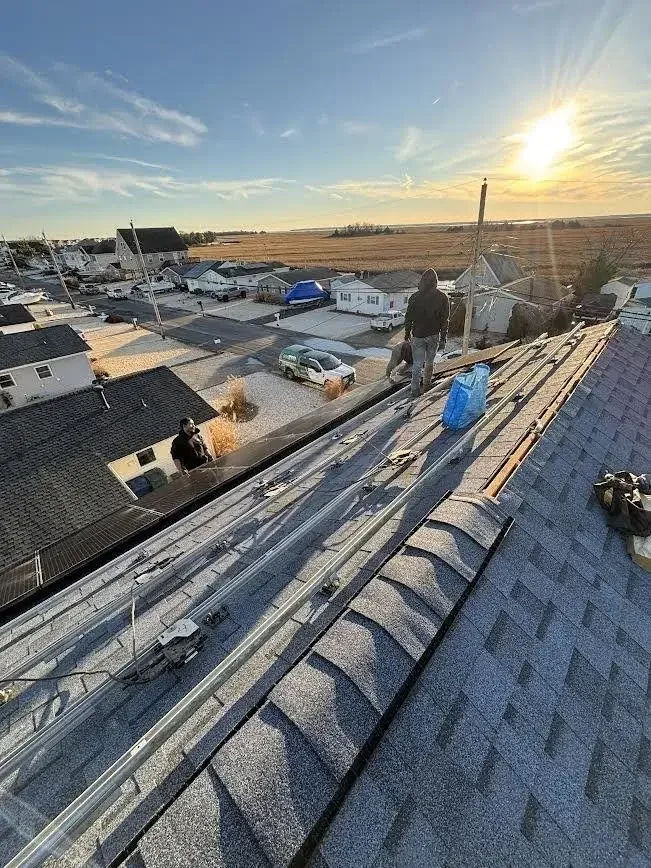
Your solar panels need to be professionally removed before any roofing work begins, then reinstalled once the new roof is complete.
This process involves safely disconnecting the electrical connections, carefully removing each panel and its mounting hardware, and storing everything securely during the roof replacement.
At GRM Roofing, we handle this entire process in-house without needing outside contractors, which saves you time and money while keeping your solar equipment safe.
How do you do roof repairs if you have solar panels?
For small repairs, we can sometimes work around the solar array if the damage is accessible. However, most repairs require removing at least some panels to properly access and fix the affected area. We carefully document which panels come from which locations, complete the repair work, inspect the surrounding areas while we have access, and then reinstall everything exactly as it was.
What happens when you have solar and need a new roof?
You'll need to have your solar panels removed, your new roof installed, and then the panels reinstalled and reconnected—it's actually the perfect time to have your mounting hardware upgraded if it's showing wear. Most homeowners are surprised to learn this process can add $3,000-$8,000 to their roofing project if they hire separate contractors. Since we handle both the roofing and solar work at GRM Roofing, you avoid those inflated costs and the hassle of coordinating multiple companies.
How much does it cost to remove solar panels for roof repair?
Removal and reinstallation costs typically range from $2,000 to $8,000 depending on your system size, roof pitch, and complexity of your setup. If you're hiring separate contractors—one for solar removal and another for roofing—you're usually looking at the higher end of that range or more. We've seen quotes as high as $5,000 just for the solar work before the roofing even starts, which is why our in-house approach saves Little Egg Harbor homeowners so much money.
What are the disadvantages of a solar panel roof?
The main disadvantage is that roof maintenance and replacement become more complex and expensive since the panels must be removed first. You'll also need to plan roof work around your solar system's warranty requirements, and any roof damage that develops under the panels can go unnoticed longer. Additionally, if your roof needs replacement before your solar panels reach their end of life (typically 25-30 years), you're facing removal and reinstallation costs you might not have budgeted for.
Ready to Get Your Roof Fixed?
If you're dealing with roof issues and you've got solar panels, you don't need to start calling around to multiple contractors hoping you can coordinate everyone's schedules. Give us a call and we'll come out to assess your roof, document your solar system, and give you a straightforward quote for the complete job.
We serve Little Egg Harbor, Tuckerton, Barnegat, and throughout Ocean County. Most homeowners are surprised at how much simpler and more affordable this process is when you're working with one contractor who handles everything. Let's take a look at your roof and figure out exactly what you need.