Do Gutter Guards Work Jersey Shore? A Little Egg Harbor Homeowner's Guide
Do Gutter Guards Work Jersey Shore? A Little Egg Harbor Homeowner's Guide
July 31, 2026
How Gutter Guards Work
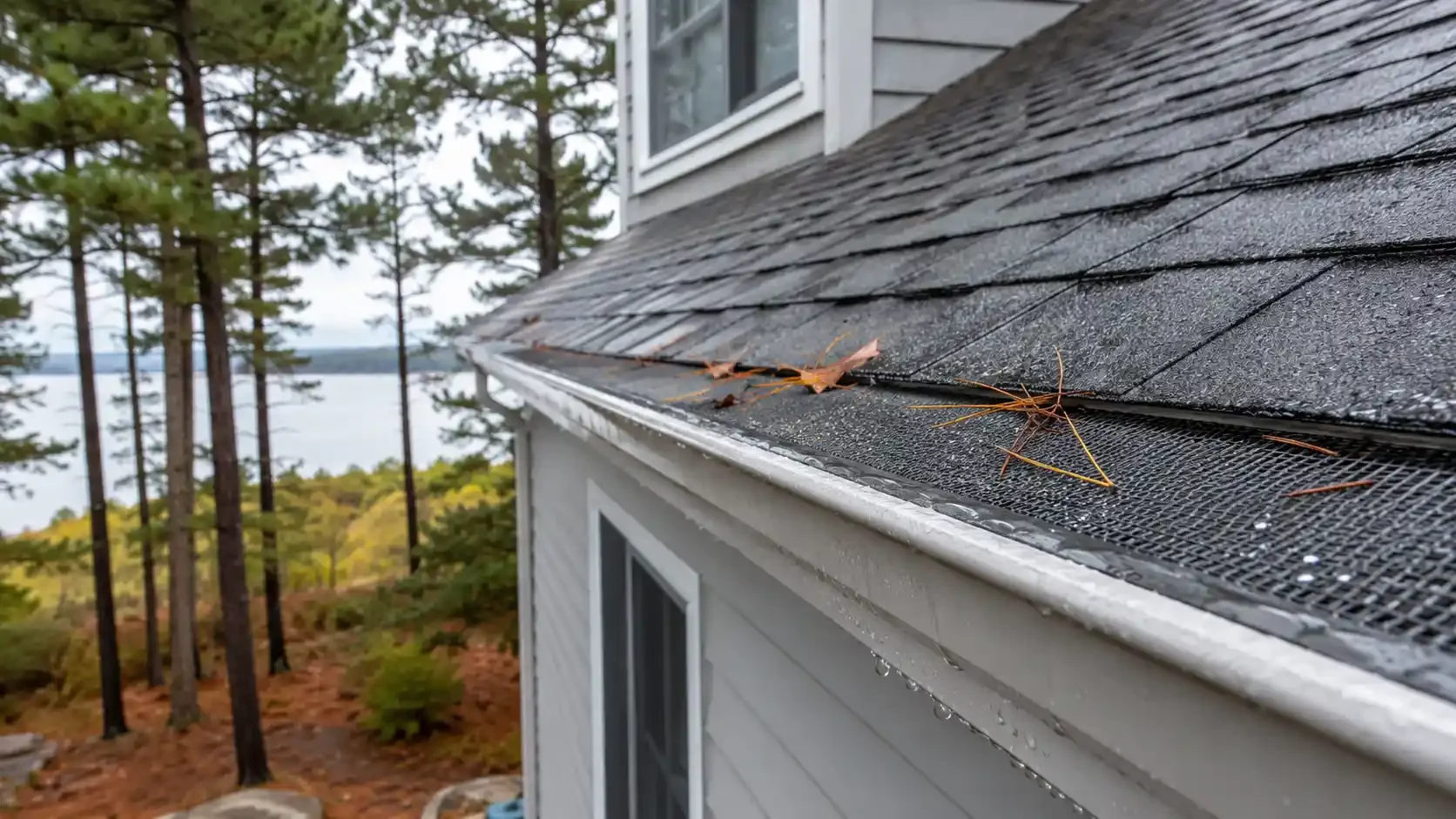
Gutter guards sit on top of your gutters and cover the opening. Rain still gets in. Leaves, pine needles, and shingle grit don't. That's the whole idea in one sentence. But how they pull that off depends on the type you pick, and not every design handles a Little Egg Harbor storm the same way.
Most guards use one of these methods to keep debris out while letting water through:
Mesh screens - a fine metal or plastic screen sits over the gutter. Water drips through tiny holes. Bigger debris sits on top until wind or rain washes it off the edge.
Micro-mesh systems - these use an even tighter weave, so they catch smaller stuff like shingle grit and small seeds too, not just leaves.
Reverse curve (surface tension) guards - water follows the curve of the guard and drops into the gutter below. Leaves and debris slide right off the front.
Foam inserts - foam blocks sit inside the gutter channel. Water soaks through the foam, debris stays on top.
Here's the part homeowners near the bay don't always think about. Salt air speeds up corrosion on cheap metal guards. And heavy wind off the water can lift lightweight screens if they're not fastened right. We've walked roofs in Little Egg Harbor where a guard looked fine from the ground but was already curling at the edges from salt exposure. That's why the material and the install matter just as much as the design itself.
Think about a typical fall afternoon here. Oak and pine debris drops fast, then a nor'easter rolls through a few days later. A mesh guard with small enough openings will stop most of that mix before it packs into your gutters. A guard with gaps too wide, though, still lets pine needles slide through sideways. That's a common mistake we see - homeowners buy a guard online, install it themselves, and the needles get in anyway because the holes were never sized for the trees on their own street.
So does the guard style even matter that much? It really does. A reverse curve guard works great in heavy leaf areas but can struggle in a hard downpour, since some water shoots right past the curve during a real gusher of a storm. Micro-mesh handles heavy rain better but needs the right slope and pitch to avoid overflow. That's a decision worth talking through with someone who's installed these systems on homes like yours.
This is where a lot of DIY gutter guard projects go sideways. Getting the pitch wrong, using the wrong fasteners for coastal wind loads, or picking a mesh size that doesn't match your tree cover- any one of these turns a helpful upgrade into a bigger headache. We'd rather walk your roof first and tell you straight what will work for your gutters, your trees, and your exposure to the water. That's exactly what our free roof inspection covers, and there's no cost to find out.
What Makes Jersey Shore Debris Different
Gutter debris in Little Egg Harbor isn't like the debris you'd find in an inland town. Do gutter guards work Jersey Shore homes the same way they work everywhere else? Not exactly, because what falls into your gutters here is a different mix altogether.
We work on roofs all over this area, and one thing stands out fast. Homes near the water deal with a mix most gutter guard makers never planned for. It's not just leaves. It's sand, salt residue, pine needles, and storm grit all landing in the same run of gutter.
Here's what typically ends up in Little Egg Harbor gutters over a season:
Pine needles from the tall pines common around Mystic Islands and nearby streets, which slide right through wide-mesh guards
Fine sand carried by wind off the bay, which settles into low spots and doesn't wash out easily
Salt air residue that builds up on metal parts and can affect how guards seal over time
Shingle grit that washes down during heavy coastal storms
Small twigs and leaf bits kicked up by nor'easters
That combination matters. A gutter guard built for a leafy suburb somewhere inland might handle big oak leaves just fine. But it can still let fine sand and pine needles through, or trap them right at the mesh line. We've pulled guards off homes near Little Egg Harbor and found a packed layer of sand and needle bits sitting right on top, doing the exact job the guard was supposed to stop. Salt air is the other piece people don't think about. It's not just about rust. Salt residue builds a thin film on metal surfaces over months. That film can make some guard materials trap moisture instead of shedding it. So a system that works great forty miles inland might not hold up the same way two blocks from the water.
Storm frequency plays a role too. This part of the Jersey Shore gets its share of nor'easters and tropical storm remnants each year. Heavy wind-driven rain doesn't just add water, it adds debris fast, all at once. A guard that's fine on a normal week can get overwhelmed during one hard storm if it wasn't built with coastal conditions in mind.
We've seen homeowners install a basic guard, feel good about it for a season, then get surprised the next spring. The sand and pine mix had packed in tight over winter. It happens more than people expect around here.
So what does this mean for you? It means the debris question isn't just "leaves versus no leaves." It's about sand, salt, pine needles, and storm intensity, all working together against whatever guard you choose. That's the real starting point for figuring out if gutter guards work for your Little Egg Harbor home, and it's why we look at the whole picture during a free roof inspection instead of guessing from a truck window.
Nor'easters, Wind-Driven Rain, and Gutter Guard Performance
Little Egg Harbor sits right in the path of nor'easters. These storms don't just dump rain straight down. They push it sideways, sometimes at 40 or 50 miles an hour. And that changes everything about how gutter guards perform.
Most gutter guards get tested and rated for regular rainfall. Water falls, hits the guard, drips into the gutter below. Simple. But wind-driven rain doesn't cooperate like that. It comes in at an angle, sometimes almost sideways during a strong nor'easter. Some guards just can't keep up with that kind of water volume moving that fast.
We've walked plenty of roofs in Little Egg Harbor after a nor'easter blew through. Here's what we typically see with gutter guards during these storms:
Overshoot - water moves so fast across the guard's surface that it shoots right past the gutter instead of dropping in
Micro-mesh clogging - fine mesh guards can trap wind-blown debris like pine needles and small twigs faster than usual
Fastener stress - repeated wind gusts loosen screws and clips over time, especially on older installs
Ice and slush backup - during a late-season nor'easter with cold rain, some guard designs trap slush at the edge
Overshoot is the one that surprises homeowners most. You'd think a gutter guard blocks debris and lets water through no matter what. But during a real coastal storm, water can move too fast for some designs to catch it at all. It just skips the gutter completely and pours straight down the side of the house.
So does that mean gutter guards don't work here? Not exactly. It means the guard design matters a lot more along the Jersey Shore than it does further inland. A guard built and tested for calmer weather patterns may struggle here. One built with coastal wind speeds in mind will handle it better.
Here's a real scenario we run into a lot. A homeowner near the bay side of Little Egg Harbor installs gutter guards during a calm stretch in spring. Everything looks great through summer. Then October comes, and the first real nor'easter hits. Suddenly water is running down the fascia board instead of into the downspout. That's not a sign the guards are junk, it's usually a sign the pitch, the guard type, or the install itself wasn't set up for wind-driven rain in the first place.
This is exactly why we don't treat gutter guard installs the same way everywhere. What works in a sheltered inland neighborhood isn't automatically the right call for a home exposed to open water and shore winds. We look at your roof's exposure, your gutter slope, and your home's actual storm history before we recommend anything.
If you're not sure how your current setup holds up during wind-driven rain, that's worth checking before hurricane season or the next nor'easter season rolls around. We offer a free roof inspection and free estimate, and we'll look at your gutters as part of that visit.