Metal Roof Cost Ocean County NJ: A Little Egg Harbor Homeowner's Guide
Metal Roof Cost Ocean County NJ: A Little Egg Harbor Homeowner's Guide
July 27, 2026
What Drives Metal Roof Cost (Beyond Material and Size)
Most homeowners think metal roof cost in Ocean County NJ comes down to two things: square footage and the type of metal you pick. That's part of it. But we've priced out a lot of roofs in Little Egg Harbor, and the real cost swings usually come from stuff nobody mentions upfront.
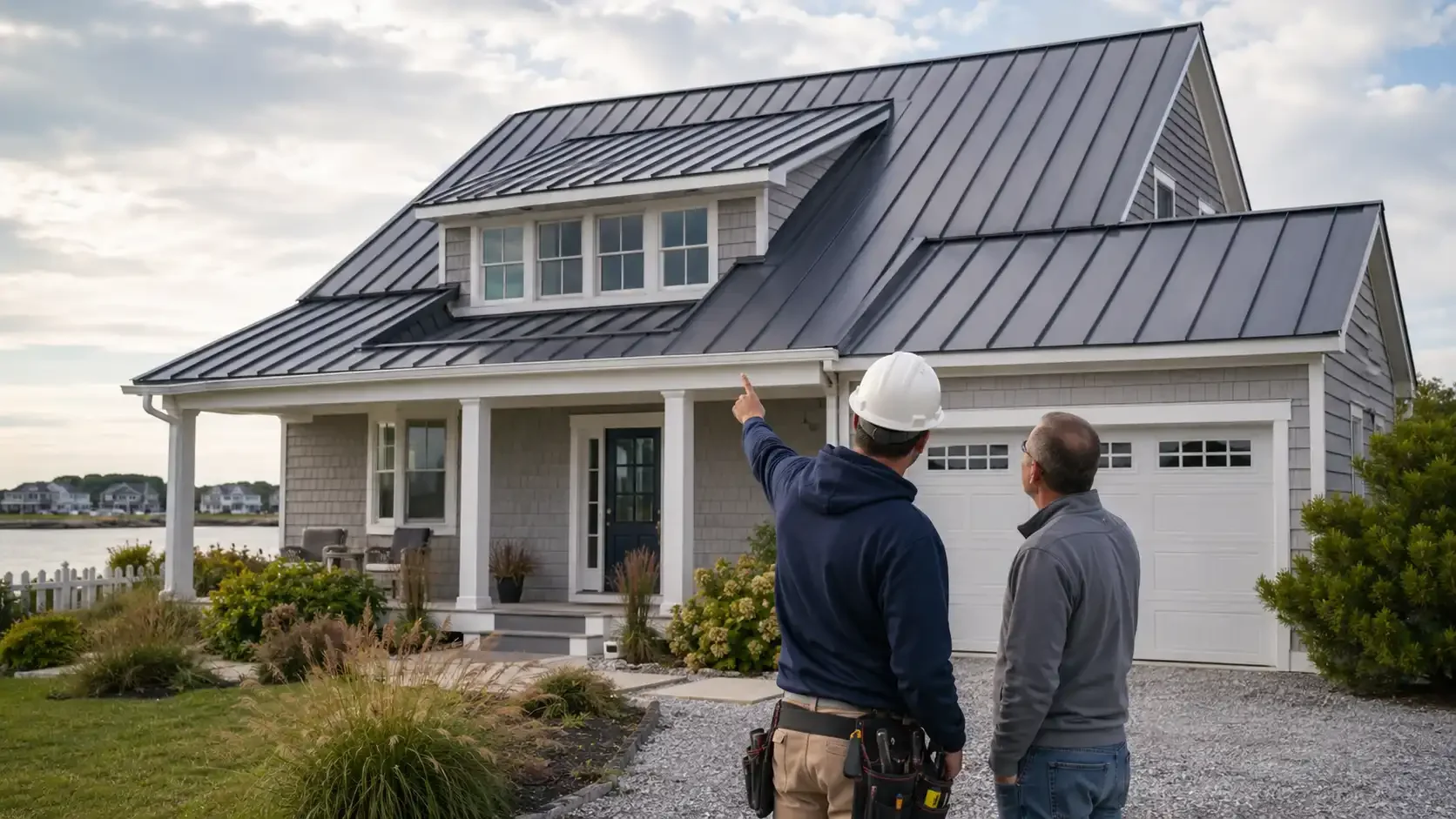
Your roof's shape matters more than people expect. A simple ranch with one flat plane costs less to cover than a home with dormers, valleys, and multiple pitches. More cuts mean more labor. More flashing means more material. And every seam is another spot that needs to get sealed right, or you'll have leaks down the road.
We see this mistake all the time: people assume the old roof just gets covered up. It doesn't work that way, at least not the right way. Tear-off adds cost, but it also lets us check the deck underneath for rot or soft spots. Skip that step, and you're hiding problems instead of fixing them.
Here's a rundown of the factors we walk through with homeowners during a free roof inspection:
Roof pitch and complexity - steep roofs and multiple angles take more time and safety gear to install correctly
Tear-off and deck repair - old shingles have to come off, and any rotted plywood underneath needs replacing before metal goes down
Underlayment and flashing quality - coastal homes near the bay need better moisture barriers because of salt air and humidity
Ventilation upgrades - proper attic airflow protects the metal from underneath and keeps energy bills lower
Access and site conditions - tight lots, tall trees, or a home close to the water can slow down equipment and staging
Coastal exposure is a big one for anyone near the water. Salt air eats through cheap fasteners and weak coatings faster than you'd think. So we use materials built to handle that environment, not just whatever's cheapest. This does add to the estimate, but it's the difference between a roof that lasts and one that starts rusting at the seams in a few years.
Wind rating matters too. Little Egg Harbor sits close enough to the coast that storm season isn't just a headline, it's something we plan for on every job. Metal roofing can handle high winds well, but only if it's installed with the right fastening pattern and clips. Cutting corners there might save a little now and cost a lot later.
One more thing that surprises people: permits and local code requirements can shift your total. Ocean County towns don't all handle roofing permits the same way, and coastal wind zone rules can require extra bracing or specific underlayment. We handle that paperwork so you don't have to chase it down yourself.
A quick real-world example: we looked at a home off Radio Road with a moderately steep roof and two dormers. The material cost was mid-range, but the labor jumped because of the extra flashing work around those dormers. The homeowner was surprised until we walked through it line by line. That's why a real quote beats a guess every time.
Want to know what your actual roof needs, not just a ballpark number? A free roof inspection gets you real answers instead of assumptions.
How Coastal Exposure Affects Roofing Decisions in Ocean County
Living near the water changes everything about your roof. We say this to almost every homeowner we meet in Little Egg Harbor. Salt air, wind, and storm season don't treat your roof like they would a house forty miles inland. That's a big reason Metal Roof Cost Ocean County NJ questions come up so often around here. People want to know if metal can hold up to what the bay and ocean throw at it.
Salt in the air is sneaky. It settles on roofing materials slowly, day after day, and it eats away at anything that isn't built to handle it. Asphalt shingles can dry out faster near the coast. Untreated metal fasteners can rust years before they should. We've seen roofs on homes just a few miles from Great Bay show wear patterns you almost never see on inland properties.
So what holds up out here? Not every metal roof is built the same, and that's the part homeowners often miss.
What Coastal Homes Need From a Roof
Corrosion-resistant metal, like aluminum or coated steel, instead of plain steel that rusts fast near salt water
Fasteners and flashing rated for coastal use, not standard inland hardware
A wind rating built for real storm conditions, not just minimum code
Proper sealing around vents and edges, since wind-driven rain finds every gap
Skip any of these, and you're looking at problems way sooner than expected. We've walked roofs in Little Egg Harbor where the metal itself was fine, but the fasteners had already started corroding under the panels. That's the kind of thing you can't see from the ground.
Wind is the other half of the story. Ocean County sees strong coastal storms, and Little Egg Harbor sits close enough to the water to catch real gusts during nor'easters and summer squalls. A roof that isn't rated for that wind can lift at the edges first. And once wind gets under one panel, it can peel back more than you'd think.
Here's a real scenario we run into a lot. A homeowner near the marina calls us after a storm, worried about a few lifted shingles. We go out for a free roof inspection, and often the shingles are just the surface problem. The underlying deck has taken on moisture from repeated small leaks nobody noticed. That's the coastal difference. Small issues compound faster here than they do inland.
This is exactly why coastal exposure plays such a big role in what a metal roof costs to do right in this area. A roof built for an inland home in central New Jersey just doesn't need the same corrosion protection or wind-rated hardware. Around Little Egg Harbor, skipping those upgrades isn't really saving money, it's just moving the cost down the road.
We're a family-owned crew, and we've built our approach around these coastal realities, not around a one-size-fits-all install. Our team includes GAF Master Elite certification, and we bring that same attention to detail whether we're inspecting a roof, repairing storm damage, or handling a full replacement. If your roof faces the bay or sits within a mile or two of open water, it's worth having someone look at it who understands what salt air and coastal wind do over time.
A roof that's built right for the coast holds up longer and costs less to maintain. That's the whole point.
Metal Roofing vs. Asphalt Shingles: What Matters Beyond the Upfront Number
Sticker price only tells half the story. When you're comparing metal roofing and asphalt shingles here in Little Egg Harbor, the real question is what happens after year one. Salt air, wind off the bay, and sideways rain during a nor'easter treat these two materials very differently over time.
Asphalt shingles cost less to install. That's true almost everywhere in Ocean County. But they wear out faster near the water. Salt in the air breaks down the granules on shingles faster than it does inland. We've pulled shingles off homes near the water that looked twenty years older than they were.
Metal roofing costs more upfront. There's no getting around that. But it holds up to wind gusts, driving rain, and salt air a lot better than shingles do. Most metal panels are rated for wind speeds well above what asphalt shingles can handle, according to industry wind-resistance standards from the Metal Construction Association. That matters a lot when you live close to the bay.
So what separates the two beyond the price tag? A few things stand out:
Wind performance: Metal panels are fastened in a way that resists uplift better in coastal gusts.
Salt air resistance: Asphalt granules break down faster in humid, salty conditions than metal coatings do.
Weight: Metal is lighter per square than most asphalt systems, which can matter on older roof decks.
Maintenance needs: Metal sheds debris and snow easier, and it doesn't grow moss the way shingles sometimes do in shaded areas.
Look and resale appeal: Metal roofs have a distinct look that a lot of buyers notice right away.
Asphalt still makes sense for some homes. If you're planning to sell soon, or the budget just isn't there this year, shingles are a reasonable choice. There's no shame in that. We tell people this all the time during inspections.
But if you're staying put for a while, and you're tired of dealing with storm damage every few years, metal starts to make more sense. Think about the last few nor'easters. Did your shingles hold up? Did you lose granules or shingles altogether? A lot of homeowners we talk to say yes.
Here's a quick real-world example. We inspected a home last year where the shingles were only twelve years old. The salt air had already eaten through the granule layer on the ocean-facing slope. The homeowner switched to metal on the replacement, mostly because they didn't want to deal with storm damage every season anymore.
Neither option is wrong. It comes down to how long you plan to stay, how exposed your roof is to wind and salt, and how much maintenance you want to deal with down the road. That's exactly the kind of thing we walk through during a free roof inspection, so you're not guessing.
Frequently Asked Questions
How do I know if I need a professional roof inspection instead of just checking myself?
You should call a professional once you notice curling shingles, granule loss, or soft spots on your roof. Walking on a roof yourself can be risky, and small issues are easy to miss from the ground. A trained inspector checks the deck, flashing, and ventilation, not just the surface. This matters even more with metal roofing, since problems often start underneath the panels. If you're near Little Egg Harbor and unsure about your roof's condition, a free roof inspection gives you clear answers instead of guesswork.
What's the biggest misconception homeowners have about metal roof cost?
The biggest misconception is that installing metal roofing over your old shingles saves money and time. Skipping tear-off can hide problems like rotted plywood or trapped moisture underneath. It also affects how well the new roof performs over the years. A proper installation removes the old layer first, so the deck gets checked and repaired if needed. This step costs a little more upfront, but it protects your investment and helps the roof hold up the way it should.
How does Little Egg Harbor's coastal location affect metal roofing decisions?
Little Egg Harbor's location near the bay means salt air and strong coastal winds play a bigger role in roofing choices. Salt can corrode weak fasteners and coatings faster than in inland areas. Wind from nor'easters and summer storms can lift panels if the fastening pattern isn't rated for it. That's why coastal homes often need corrosion-resistant metal and stronger flashing than homes further inland. These upgrades protect your roof long term, even though they can add to the total project.
Does Ocean County require permits for a metal roof replacement?
Yes, most Ocean County towns require a permit before starting a metal roof replacement. Requirements can vary between towns, especially in coastal wind zones like Little Egg Harbor. Some areas call for extra bracing or specific underlayment because of storm exposure. Handling this paperwork yourself can slow down your project if something gets missed. A local roofing crew familiar with area codes can manage permits for you, so your installation stays on schedule and meets local requirements.
What's the difference between repairing a roof and replacing it with metal?
Repairing a roof fixes a specific problem, like a leak or a few damaged shingles, without changing the whole system. Replacing with metal means removing the old roofing material and installing a full new system built for long-term protection. If your roof has widespread wear, multiple leaks, or a failing deck, repairs often become a temporary fix. Homeowners near the coast especially benefit from replacement, since ongoing salt exposure wears down aging materials faster. A full evaluation can help you decide which option fits your home.