What Is a Solar Panel Detach & Reset — and Why Your Roofer Should Handle It
What Is a Solar Panel Detach & Reset — and Why Your Roofer Should Handle It
April 11, 2026
Most homeowners with solar panels don't think about the roof until there's a problem. Then they find out that most roofers won't touch the panels — or worse, that their roofer handled them without a licensed electrician and now the warranty is in question. G.R.M. Roofing is built differently. We have an in-house licensed electrician for solar panel disconnection and reconnection. One call handles both.
What a Detach & Reset Actually Involves
A Detach & Reset is exactly what it sounds like — but the details matter.
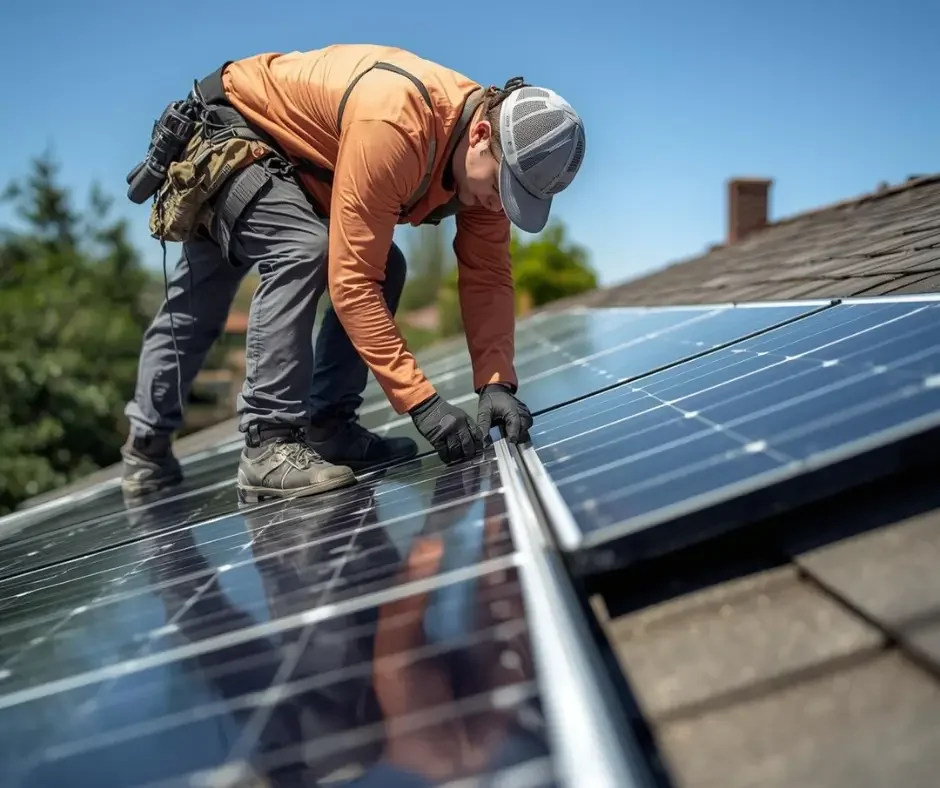
Your solar panels are physically mounted to your roof. They're also wired into your home's electrical system. To do any meaningful roofing work underneath an array, the panels have to come off. Here's what that involves:
A licensed electrician disconnects the panel wiring — not just the breaker, but the DC-side connectors that carry voltage even when the system appears to be off.
The panels and racking hardware are carefully removed and stored on the ground or in a protected area.
The roofing work is completed — repair, replacement, or whatever the job requires.
The panels go back on in the original configuration, wiring is reconnected by the licensed electrician, and the system is verified before anyone leaves the site.
The electrical disconnection step is where most roofing contractors run into trouble. More on that in the next section. If your situation involves more than a standard Detach & Reset, our solar panel roof repair and replacement services cover a wider range of scenarios.
Why Most Roofers Can't Handle It
Most roofing contractors aren't licensed electricians. In New Jersey, you need a license to legally disconnect and reconnect solar panel wiring. The DC circuits in a solar array carry high voltage — even with your main breaker off, panels exposed to daylight are generating current. This is not a job for someone without the right training and credentials.
When a roofer doesn't have a licensed electrician on staff, they have two options: tell the homeowner to call their solar company first, or hire a third-party electrician to cover that piece of the job. Both options add delays. Both create coordination gaps. And when something goes wrong — a connector improperly re-seated, a system underperforming after reinstallation — figuring out who's responsible gets complicated.
What Happens When the Roofer and Electrician Are Different Companies
Here's a situation that comes up more often than it should.
A homeowner needs a roof replaced. The roofer says they'll need to contact the solar installer first to remove the panels. The solar company schedules the removal — two weeks out. The roofer does the new roof. Now the homeowner has to schedule reinstallation, which is another cycle. Six weeks have passed. There's been no solar production, and if anything in the reinstallation isn't done to spec, the warranty question falls into a gray area between two companies that aren't talking to each other.
Liability gaps, scheduling friction, and accountability gaps are built into that model. It's not the contractor's fault the system is structured that way — but it is your problem when you're the homeowner in the middle.
How G.R.M. Roofing Handles It Differently
G.R.M. Roofing has an in-house licensed electrician for solar panel disconnection and reconnection. That's not a subcontract relationship — it's our team.
When we take on a roofing project that involves solar panels, the electrical work is part of the same job. One schedule. One crew. One point of accountability. When the project is done, we've handled both the roof and the panels — and you have one number to call if any question comes up afterward.
When Do You Need a Detach & Reset?
Not every roofing job requires one. Here's when you do:
Roof replacement. Any full tear-off under a solar array requires the panels to come off first. There's no safe way around it.
Major repair under the panel area. If the damage is under or near your array, the panels need to be removed to properly access the decking.
Storm damage under the array. After a nor'easter or severe storm, damage under mounted panels often goes undetected. See our roof repair services [link below] for more on storm-related damage. For urgent situations, emergency roof repair is available immediately.
Re-roofing for an insurance claim. If you're doing a full replacement after storm damage, the insurance estimate typically accounts for panel removal and reinstallation as a separate line item. Make sure your contractor can handle it.
Frequently Asked Questions
Can any roofer remove and reinstall solar panels?
No. Solar panels involve live electrical components that require a licensed electrician to safely disconnect and reconnect. A roofer without an electrician on staff must hire a third party, which adds cost and delays.
Will removing and reinstalling solar panels void my warranty?
It can, if the work is done by an unlicensed or unqualified party. Using a certified team that follows the manufacturer's reinstallation process protects your solar warranty.
How long does a Detach & Reset typically take?
The timeline depends on the size of the array and the scope of the roofing work. In most cases, removal and reinstallation can be completed within one to two days around the roofing schedule.
Have solar panels and need roofing work done? Call (609) 389-2485 or visit our Solar Panel Detach & Reset page to learn more. We serve the full Ocean County area, Monday through Friday, 7AM to 7PM.