Roof Installation Process: A Step-by-Step Guide for Tuckerton Homeowners
Roof Installation Process: A Step-by-Step Guide for Tuckerton Homeowners
Aug 15, 2026
Most roof installation process guides tell you what happens. Very few tell you what the town inspector is going to check, or which steps are actually required by code here.
That matters, because the steps a contractor can quietly skip are the ones you will never see once the shingles go on.
Here is how the roof installation process works in Tuckerton and the rest of Ocean County, start to finish.
STEP 1: Inspection and Measurement
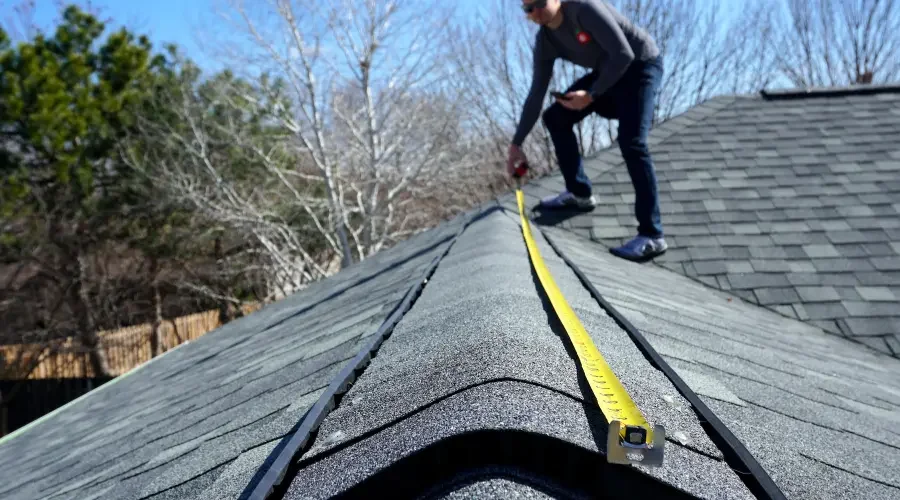
We get on the roof, measure every plane, and count the layers already up there.
Layer count drives cost. A single layer means a straightforward tear-off. Two layers means double the disposal and often surprises underneath.
We also check the decking, the ventilation, and the flashing details at every chimney, wall, and vent.
STEP 2: Getting Permit
New Jersey enforces the Uniform Construction Code, and most towns require a permit for a full re-roof.
Permit fees and requirements vary by municipality. Some Ocean County towns want an inspection after tear-off, before the new material goes down. Others only inspect at the end.
Unpermitted roof work causes real problems later, usually when you sell and a buyer's attorney asks for the paperwork.
Roof Permit Guide for Little Egg Harbor ▸
STEP 3: Property Protection
Before anything comes off, tarps go over landscaping, plywood leans against siding, and vehicles get moved out of the drop zone.
Skip this step and you find shingle debris in your flower beds for two years.
STEP 4: Tear-Off
Old shingles, old underlayment, and old flashing come off down to bare decking.
Full tear-off is the standard approach for a reason. It is the only way to see the wood. A layover hides everything underneath it.
STEP 5: Deck Inspection and Repair
This is where hidden costs show up, and where honest contractors separate themselves.
Rotted or soft plywood gets replaced. On coastal homes, rot usually appears near the eaves, in valleys, and around chimneys where water has been sitting.
A fair contract states the per-sheet price for decking replacement before work starts. That way the number is agreed on before anyone is standing on your roof with a pry bar.
STEP 6: Underlayment and Ice Barrier
Underlayment covers the whole deck. Most contractors here now use synthetic instead of felt because it lays flatter and handles water better.
Now the part almost nobody in this industry states correctly.
New Jersey's ice barrier requirement applies where the average January temperature is 25 degrees or below. A state Department of Community Affairs bulletin identifies that area as Sussex County.
Ocean County is not in it. Ice and water shield at the eaves is not code-required here.
That does not mean skip it. Many good roofers install it at eaves and in valleys anyway, because ice damming still happens at the shore. It does mean two quotes can differ on this line and both be legal. Ask which one you are getting.
STEP 7: Drop Edge, Valleys, and Flashing
Drip edge is required at eaves and rakes on shingle roofs. Code calls for it to extend at least two inches back onto the roof deck and at least a quarter inch below the sheathing.
Open metal valleys run at least 24 inches wide. Closed valleys use different lining, so ask which type your roof has.
Step flashing at roof-to-wall junctions runs at least four inches high by four inches wide.
Then there is the one that causes the most expensive hidden damage. Where a roof edge runs into a wall, code requires flashing that diverts water away from that junction. It is called kick-out flashing, it is a small bent piece of metal, and leaving it out sends years of runoff straight down inside the wall. Ask whether it is on your roof.
Near the water, the metal matters as much as the method. Salt air eats standard fasteners and flashing. Corrosion-resistant materials cost a little more and last a lot longer.
STEP 8: Shingles and the Nailing Pattern
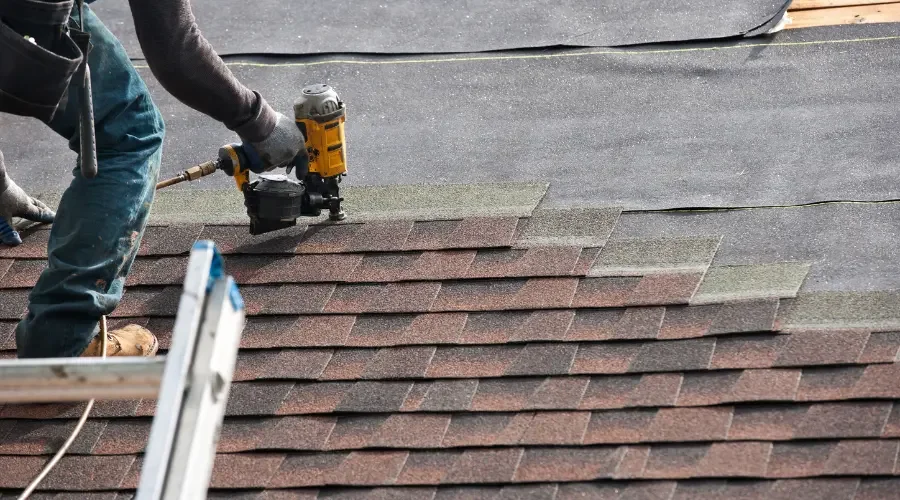
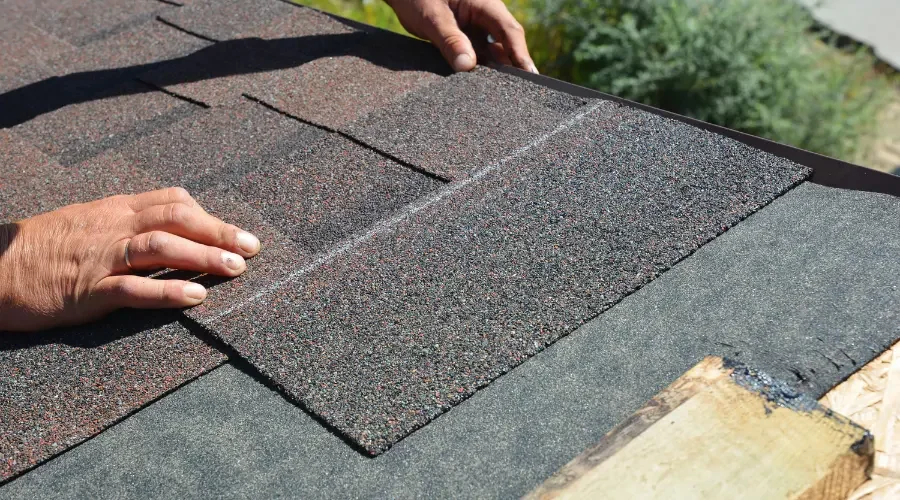
Starter strip goes down first along the eaves and rakes. Then field shingles work upward.
Nail count is the detail that decides whether your roof survives a nor'easter. Standard installation uses four nails per shingle. In higher wind zones, most manufacturers require six.
Coastal and barrier island parts of New Jersey sit in some of the highest wind design zones in the region. Six-nail patterns are common here for good reason.
Ask your contractor which pattern they are using and get it in writing.
STEP 9: Ventilation and Ridge
Ridge vent goes on last across the peak. Proper intake at the soffit has to match exhaust at the ridge, or the system does not move air.
Bad ventilation cooks shingles from underneath and shortens roof life. It is also one of the most common code items a town inspector flags.
STEP 10: Cleanup
Debris gets hauled out. A magnetic sweep runs across the driveway, lawn, and walkways to pull nails.
Ask specifically whether the sweep is included. Nails in a tire two weeks later is the single most common complaint after an otherwise good roof job.
STEP 11: Final Inspection
The municipal inspector comes out and signs off. Keep that paperwork with your closing documents.
How Long It Takes
Most single-family roofs here finish in one to three days depending on size, pitch, and weather.
Decking surprises add time. So does rain, because underlayment and shingles cannot go down on a wet deck.
Frequently Asked Questions
Do I need a permit to replace my roof in Tuckerton?
In most cases yes. New Jersey towns enforce the Uniform Construction Code and require permits for full re-roofing. Fees and inspection requirements vary by municipality, so confirm with your contractor which town rules apply.
Is ice and water shield required in Ocean County?
No. New Jersey's ice barrier requirement applies to Sussex County. Many roofers install it here anyway at eaves and valleys for added protection, but it is an option rather than a code requirement.
Can you install a new roof over my old shingles?
It is sometimes allowed, but it hides the condition of the decking and can shorten the life of the new roof. A full tear-off lets us see and fix what is underneath.
How many days will my roof take?
Most homes take one to three days. Larger or steeper roofs and unexpected decking repairs can add time, and rain pauses work entirely.
Do you work on Long Beach Island and Beach Haven West?
Yes. We install roofs across Tuckerton, Little Egg Harbor, Manahawkin, Barnegat, Stafford Township, Waretown, and Long Beach Island.
What happens if you find rotted wood under my old roof?
We show you the damage and replace the affected sheathing. Ask for the per-sheet price in your contract up front so there is no argument about it mid-job.
Ready to Talk About Your Roof?
We will measure, inspect, and walk you through exactly what your roof needs before you commit to anything.
Call G.R.M. Roofing at (609) 389-2485 for a free inspection and a same-day estimate.