
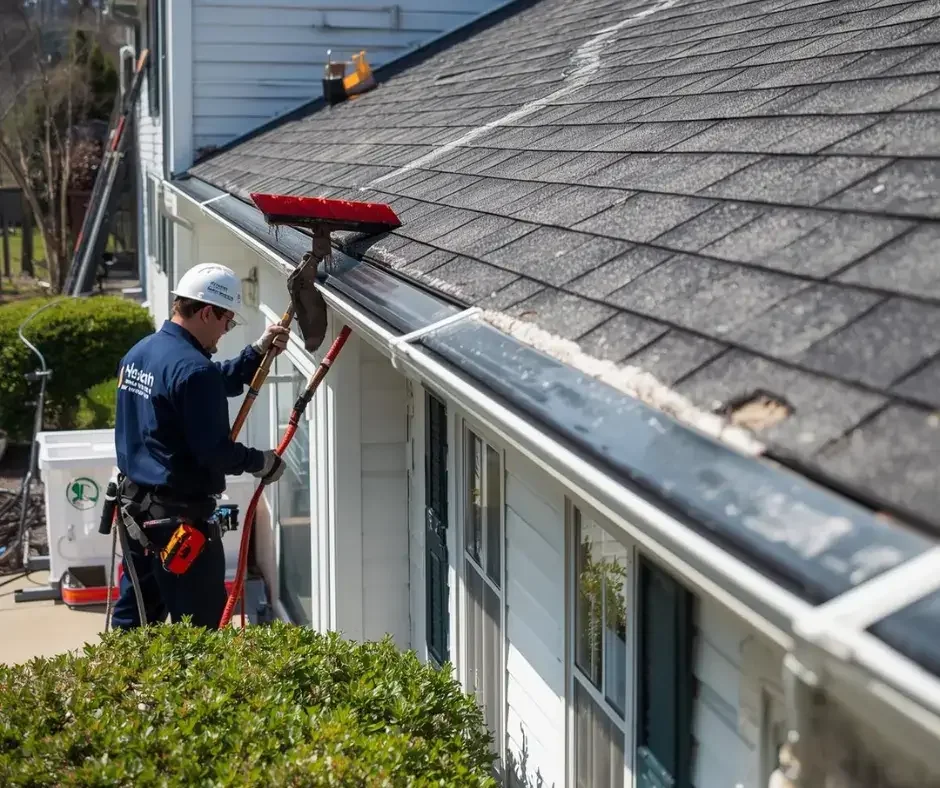
Gutter Guards Ocean County NJ: What Little Egg Harbor Homeowners Should Check First
Signs You Need Gutter Protection in Pine-Heavy Yards
Pine needles are sneaky. They don't clog gutters the way big oak leaves do, they build up slow, layer after layer, until you've got a mat of dead needles holding water like a sponge. If your house sits under a stand of pines, or near one, you're dealing with a different problem than most homeowners.
So what do you look for? A few things stand out.
Rust colored streaks running down your siding, even after a light rain
Gutters that sag or pull away from the fascia board
Standing water in the trough days after the storm passed
Sprouting seedlings or moss growing right out of the gutter itself
Water pouring over the sides during a downpour instead of through the downspout
We see this a lot on homes near the wooded lots off Radio Road, where mature pines drop needles pretty much year round, not just in fall. That's the tricky part with pines. Homeowners think they're safe once autumn cleanup is done, then get surprised in July when a gutter's already packed tight.
Here's the thing about needle buildup, it holds moisture against your fascia and soffit longer than leaves do. That constant damp can rot wood over time, and it's the kind of damage you don't notice until it's already spread.
Not sure if your place qualifies as pine heavy? If you can stand in your yard and see needles collecting on your roof valleys or in your gutters within a few weeks of a cleaning, that's your answer. Guards designed with tighter mesh handle fine debris like pine needles a lot better than the open styles built mainly for leaves. Getting the right style matters here more than most folks realize.
Choosing the Right Gutter Guard Type for Your Debris Load
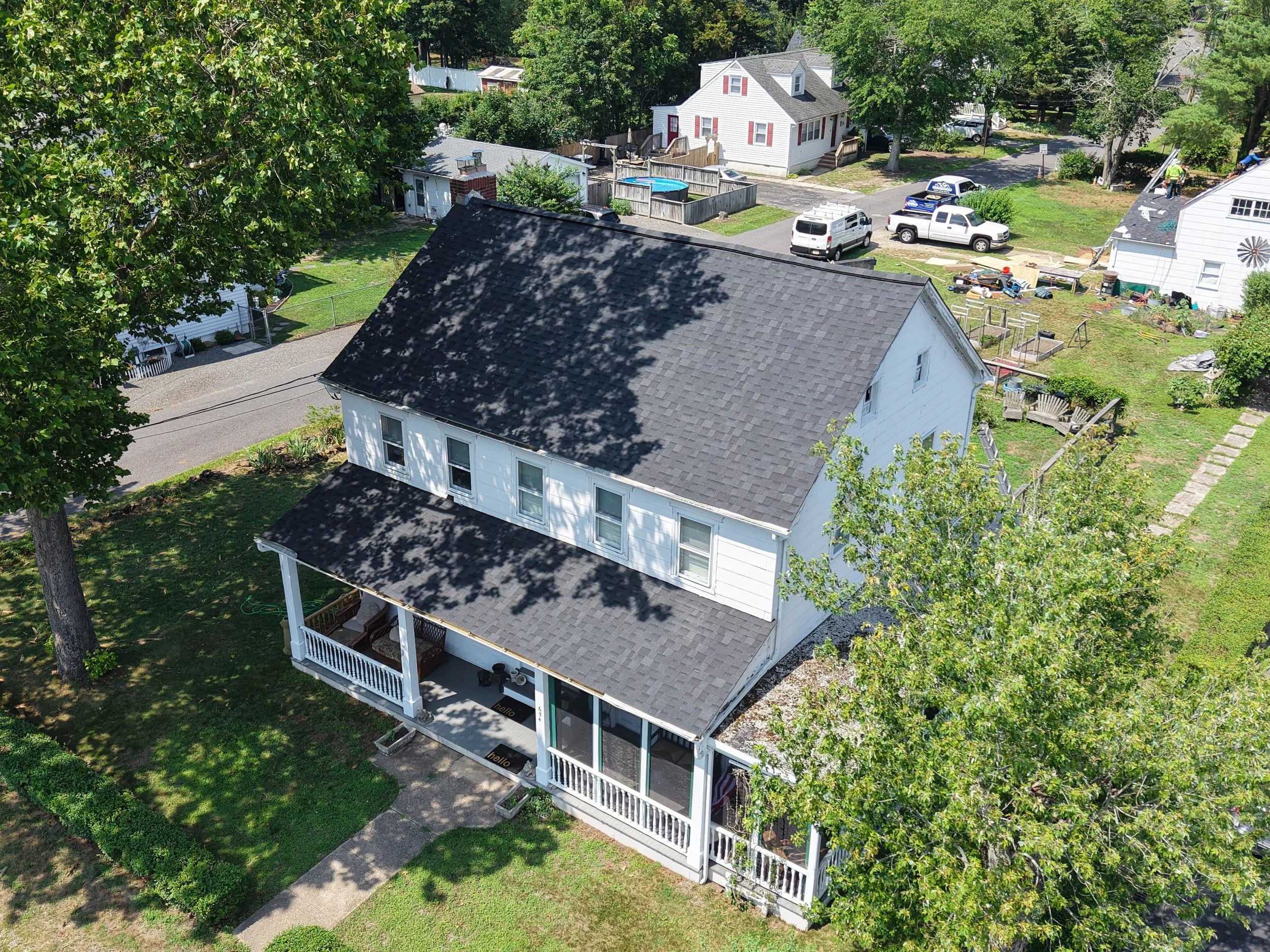
Not every gutter guard fits every roof. That's the honest truth. A screen guard works fine for a ranch home with a few maple leaves each fall. But if you're under a heavy pine canopy near the bay side of Little Egg Harbor, those fine needles will pack right through a basic mesh screen and clog the channel anyway.
Micro-mesh guards handle pine needles and shingle grit better than plain screens. They're tighter woven, so less gets through. Reverse-curve or surface-tension guards shed leaves well but can struggle with heavy debris loads during a wind-driven nor'easter, when leaves and small branches come down fast and pile up on the curve itself.
So how do you pick? Start with what's falling on your roof.
Mostly broad leaves (oak, maple): a standard mesh guard usually does the job
Pine needles or small debris: go with tighter micro-mesh
Heavy storm debris and salt spray near the water: look for a guard rated for coastal wind exposure
Flat or low-slope roof sections: some guard styles just don't drain right on these, worth a second look
Here's the thing nobody tells you. The guard has to match your roof pitch too, not just your trees. A guard that works great on a steep colonial roof might not shed water the same way on a lower-pitch ranch. We look at both when we're out at your place, tree cover and roof shape together, not just one or the other.
We'll walk your roofline with you during the free inspection and point out exactly what's driving your clogs. Sometimes it's not the trees at all, it's a valley collecting runoff from a steeper section above. That's a five minute conversation that saves you a wrong guess on the wrong guard.
When You Don't Need Gutter Guards Yet
Let's be honest for a second. Not every home needs gutter guards right now, and we'd rather tell you that than sell you something you don't need.
If your home is newer, sits on a lot with few mature trees, and your gutters run clean most of the year, you might be fine waiting. A lot of the newer construction near Route 9 in Little Egg Harbor falls into this group. Young trees mean less leaf and seed drop, so the gutters just don't clog the way an older, tree-lined lot would.
Same goes if you're already staying on top of gutter cleaning twice a year. Some homeowners handle it themselves with a ladder and a Saturday afternoon. Others have us come out for gutter cleaning on a schedule. Either way, if the system's staying clear, guards are more of a convenience than a need.
And if you're planning a roof replacement soon, hold off. It makes more sense to handle gutters and gutter guards at the same time as new roofing, not before. Doing it twice costs you twice.
One more thing. If you've got serious pitch or fascia issues, no gutter guard fixes that. Guards keep debris out, they don't correct a system that's already failing or pulling away from the house. That's a repair problem first.
Why Your Roofline Matters Before Any Gutter Guard Goes On
Gutter guards don't just sit in your gutters. They attach right to your roofline, along the edge where your shingles meet the drip edge. That's the part most homeowners never think about.
If that edge is soft, lifted, or rotted, a gutter guard has nothing solid to grip. It'll pull loose in the first big blow off the bay. We see this a lot on older homes near the water in Little Egg Harbor, where salt air eats away at fascia boards faster than it does a few miles inland. Wood swells, paint cracks, nails back out. You might not notice from the ground.
So before we ever talk about gutter guards, we look at the roofline itself. Shingle edges. Flashing around vents and chimneys. Drip edge condition. Fascia board integrity. If any of that is compromised, installing a guard on top of it just hides a bigger problem, it doesn't fix one.
This is where our free roof inspection earns its keep. We're up there anyway, checking wind lift and granule loss. Checking your roofline first costs you nothing and tells us whether gutter guards will hold.
Here's the honest version: a gutter guard is only as good as what it's screwed into.
And if your fascia is spongy or your shingles are curling at the edge, no guard on the market will stay put through a nor'easter. We'd rather tell you that upfront than install something that fails in six months. That's just how we'd want a roofer to treat our own house.
What to Ask Before Hiring a Gutter Guard Installer
Before you hand your gutters over to anyone, ask a few questions first. This isn't about being difficult. It's about protecting your roof edge, your fascia, and your money.
Start with the basics. Is the contractor licensed and insured in New Jersey? Ask to see it. Don't just take their word for it. A roof edge job gone wrong can mean water behind your siding within a season, and you want someone who's on the hook if that happens.
Next, ask what guard system they install and why. A good installer should explain how the product handles pine needles versus oak leaves, how it performs in wind gusts off the bay, and whether it needs any maintenance at all. If they can't explain the difference between a mesh guard and a solid surface style in plain language, that's a flag.
Ask about the roof itself, too. Nine times out of ten, a gutter conversation turns into a roof conversation once someone gets up on the ladder. Loose shingles, soft fascia board, or a sagging gutter line often point to a bigger issue than leaves. A contractor who only talks gutters and won't look at the roof above them isn't giving you the full picture.
Here's what we'd want you to ask, in order:
Are you licensed and insured in New Jersey?
Will you inspect the roof and fascia, not just the gutter line?
What happens to my existing gutters, do they get reused or replaced?
How does this guard system handle heavy coastal rain and wind?
We offer a free roof inspection and a free estimate, no pressure attached. As a GAF Master Elite certified contractor, we look at the whole system, roof, gutters, and edge, before we recommend anything. Call us at (609) 389-2485 and we'll walk it with you.
Frequently Asked Questions (FAQs)
How do I know if I need gutter guards or just more frequent cleaning?
You need gutter guards if your gutters clog up again just weeks after a cleaning. Newer homes near Route 9 with young trees often stay clear on their own and don't need guards yet. But if you're under mature pines or hardwoods and cleaning twice a year isn't cutting it, guards start making sense. We'll check your tree cover and roof shape together during a free inspection to give you a straight answer.
Will pine needles clog my gutter guards the way they clog open gutters?
Standard mesh guards can let pine needles through, but tighter micro-mesh guards handle them much better. Pine needles build up slower than leaves, so homeowners near wooded lots off Radio Road often get surprised in July, long after fall cleanup. If you see needles collecting in your gutters within weeks of a cleaning, that's a sign you need the finer mesh style, not a basic screen guard.
What happens when you come out to look at my gutters?
We walk your roofline with you and check both your tree cover and roof pitch before recommending anything. This includes looking at shingle edges, flashing, drip edge condition, and fascia boards, since guards attach directly to that edge. Sometimes the real issue is a valley collecting runoff from a steeper roof section, not your trees at all. That five-minute walkthrough saves you from picking the wrong guard for your setup.
Can gutter guards be installed on any home, or does my roof need repairs first?
Gutter guards need a solid roofline to grip onto, so soft, lifted, or rotted fascia has to be fixed first. This comes up often on older homes near the water in Little Egg Harbor, where salt air eats away at fascia boards faster than a few miles inland. If your roofline is compromised, a guard installed on top just hides the problem instead of fixing it.
What type of gutter guard holds up best near the bay in Little Egg Harbor?
Guards rated for coastal wind exposure hold up best near the bay side of Little Egg Harbor, where salt spray and storm debris are harder on standard guards. Reverse-curve styles shed leaves well but can struggle during a wind-driven nor'easter when debris piles up fast. We look at your exposure to wind and water when matching a guard style, not just the trees dropping debris on your roof.
Should I wait to install gutter guards if I'm planning a roof replacement?
Yes, it's smarter to wait and handle gutters and gutter guards at the same time as your new roof. Doing the work twice costs you twice, and a fresh roofline gives guards something solid to attach to from the start. If a roof replacement is on your radar in the next year or two, hold off on guards until that project is scheduled.
Areas We Service
We proudly serve a wide range of communities with top-quality roofing services. We are committed to providing reliable and professional service to homeowners and businesses in the following areas:
Our crews work throughout Little Egg Harbor and surrounding towns like:
📌 Tuckerton
📌 West Creek
📌 Manahawkin
📌 Barnegat
📌 Forked River
📌 Waretown
📌 Beach Haven West
📌 Stafford Township
📌 Long Beach Island
If you don’t see your area listed, don’t worry! We are always expanding and may still be able to assist you. Contact us to find out if we service your location.